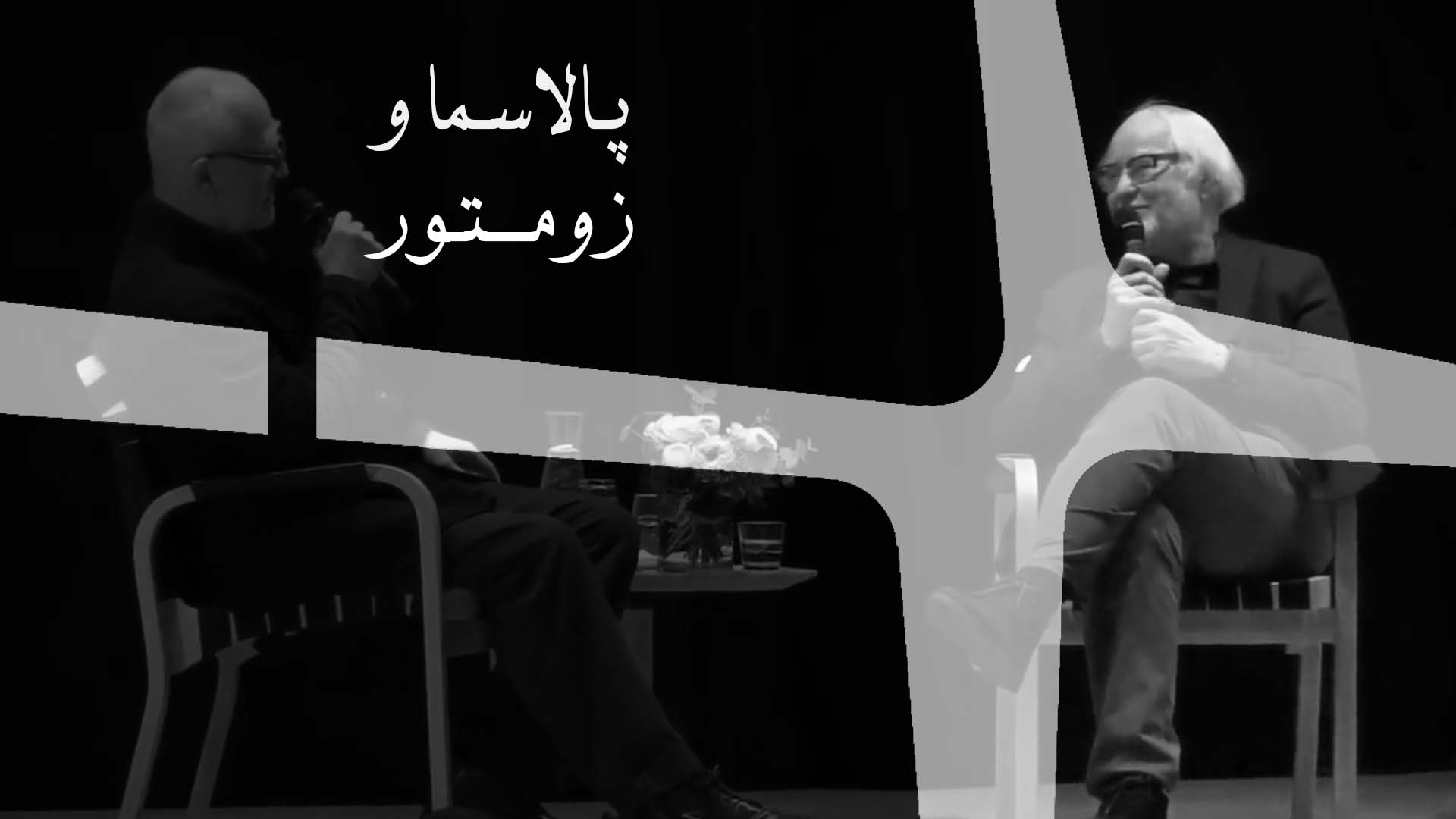

Atmosphere: The Invisible Spirit of Architecture From the Perspective of Peter Zumthor to Juhani Pallasmaa Architecture is not merely the construction of walls, roofs, and forms; it is the creation of experience. What people remember from a space is often neither its dimensions nor its technical details, but rather the feeling it evokes—a sense of tranquility, silence, belonging, grandeur, or even anxiety. In recent decades, the concept of atmosphere has become one of the most significant theoretical subjects in architecture, a notion that architects such as Peter Zumthor and Juhani Pallasmaa have brought to the heart of contemporary architectural discourse. Peter Zumthor: Architecture as a Sensory Experience Atmospheres, Peter Zumthor's renowned book, is one of the most influential works on the emotional quality of space. In this book, Zumthor describes architecture not merely as a visual object but as a multisensory experience. He argues that a good building is felt before it is seen. "Atmosphere also occupies an important position for the Swiss architect Peter Zumthor. In his book Atmospheres, he introduces a collection of themes that have contributed to achieving architectural atmospheres in his work. Material Compatibility, The Temperature of Space, Levels of Intimacy, and Architecture as Surroundings are among these themes." — Peter Zumthor, Atmospheres, 2006 (Excerpt from the Persian book Building Atmosphere: Formless Form, by Juhani Pallasmaa, Peter Zumthor, and Gernot Böhme, 2024.) Zumthor considers atmosphere to be a quality that emerges from the interaction of light, materials, sound, temperature, scale, and even silence. In his view, architecture becomes meaningful when it establishes an emotional connection between human beings and space. This perspective elevates architecture beyond a purely functional product and transforms it into an art of creating mood and ambiance. In projects such as Therme Vals and the Kolumba Museum, the quality of light, the texture of materials, and the silence of space become integral parts of the architectural experience—as though the building creates emotion before it speaks. Juhani Pallasmaa: Architecture Beyond Vision On the other hand, the Finnish architect and theorist Juhani Pallasmaa offers a profound critique of the dominance of vision in contemporary architecture. In his celebrated book The Eyes of the Skin, he argues that architecture should engage all human senses, not merely the eye. Pallasmaa writes: "Authentic architectural experiences consist of multisensory qualities; the qualities of space, matter, scale, and shadow are measured equally by the eye, ear, nose, skin, tongue, and skeleton." — Juhani Pallasmaa, The Eyes of the Skin, 1996 He believes that late modern architecture has become excessively dependent on image and form while neglecting the bodily and sensory relationship between humans and space. According to Pallasmaa, good architecture should be lived, not merely seen. He further states: "In the experience of architecture, the human body is the center of perception." This viewpoint directly connects spatial quality to human perception: a space succeeds when it deepens our sense of presence in the world. Spatial Quality and Atmosphere: Beyond Aesthetics Today, numerous studies in environmental psychology and architectural research demonstrate that spatial quality and atmosphere have a direct impact on human emotions, behavior, and even health. Research in the fields of Environmental Psychology and Architecture & Human Behaviour indicates that natural daylight, human scale, material texture, acoustics, and the sensory qualities of space can significantly influence levels of stress, concentration, relaxation, and sense of belonging. For example, studies on hospital design have shown that environments enriched with natural light, warm materials, and appropriate sensory qualities can accelerate patients' recovery. Likewise, in educational settings, the atmosphere of a space can positively affect students' learning and concentration. In many contemporary publications, the concept of Atmospheric Architecture is presented as an approach that aims to create emotional and human-centered spatial experiences. This perspective rescues architecture from becoming a mere object of formal expression and reconnects it with lived human experience. Architecture: Constructing the Sense of Presence Perhaps the most important challenge for architecture today is neither formal complexity nor technological innovation, but rather the ability to create presence—spaces where people feel more alive, more peaceful, and more aware of themselves and their surroundings. Peter Zumthor and Juhani Pallasmaa, each in their own way, remind us that true architecture cannot be reduced to images. Architecture lives in the memory of the body, in the silence of light, in the scent of wood, in the echo of footsteps, and in the invisible quality of space. Atmosphere is what makes certain places unforgettable. "...In my view, architecture has become too professionalized. Architects increasingly behave like lawyers and engineers. I believe this is the wrong direction. Architecture is something else; it is a humanistic endeavor. And, as I have said before, our task is to continue a tradition—to ensure that there is no rupture in the history of human wisdom and understanding..." — Excerpt from an interview with Juhani Pallasmaa and Peter Zumthor