
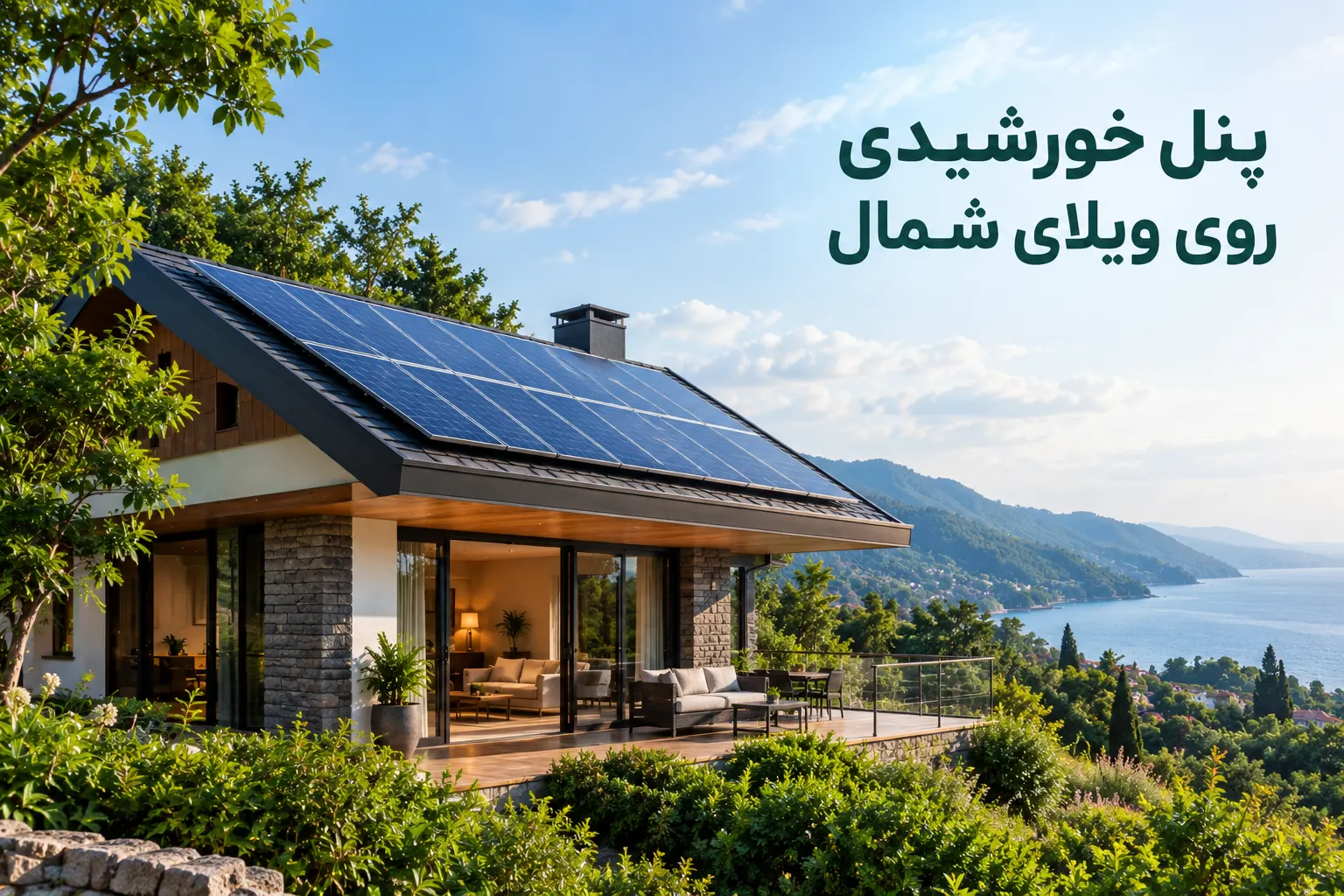
Anyone who has spent a summer week in Babolsar knows the northern sun isn’t weak. Anyone who has seen its winter also remembers the run of grey, rainy days. So the question is: how much electricity do solar panels on a northern villa’s roof actually produce? We won’t guess; we’ll answer with numbers.
The tool: an official European calculator
The European Commission’s Joint Research Centre runs a free tool called PVGIS. For any point on the map, using years of satellite irradiance data (2005–2020), it calculates how much electricity a solar system produces — cloud, temperature and sun angle all included. We ran it per kilowatt of panels, with 14% system losses (the tool’s default) at the optimal angle:
| City | Annual output (kWh per kW of panels) | Relative to Tehran |
|---|---|---|
| Babolsar | 1,331 | 83% |
| Tehran | 1,613 | 100% |
| Yazd | 1,730 | 107% |
Source: PVGIS — European Commission Joint Research Centre (PVGIS-SARAH2 data, 2005–2020)
So the same panel produces about 17% less in Babolsar than in Tehran. Not nothing, but not much either: panels work in the north; they just need their own sums. The Mazandaran Meteorological Office reports average annual sunshine in Babolsar of 2,085 hours.
Source: Mazandaran Meteorological Office — Babolsar climate
Winter, when you need the power most
By the same calculation, each kilowatt of panels in Babolsar yields about 83 kWh a month in December and about 140 in June. Winter output is roughly 60% of summer’s. If you want to cover the villa’s winter electricity too, that dip has to be built into the system size from the start.
Roof orientation matters more than the panel brand
This is the part we architects find most interesting, because it goes straight back to roof design. We ran the same tool for Babolsar at different orientations and pitches:
| Panel pitch and orientation | Annual output (per kW) | Relative to best |
|---|---|---|
| 33°, facing south (about optimal) | 1,323 | about 100% |
| 15°, facing south | 1,279 | 96% |
| Flat (horizontal) | 1,174 | 88% |
| 33°, facing west | 1,126 | 85% |
| 33°, facing east | 1,025 | 77% |
| 33°, facing north | 785 | 59% |
Source: PVGIS, our calculation for Babolsar’s coordinates
The result is clear: panels on the north slope of a roof produce about 40% less than the same panels on the south slope. The pitched roofs of the north (why they’re pitched is in Pitched or Flat Roof) are ready for panels if they’re designed from the start with a large, unshaded south slope. If you decide on panels later and the south slope is full of vents and chimneys, it’s too late.
Salt and damp: there’s a standard for panels too
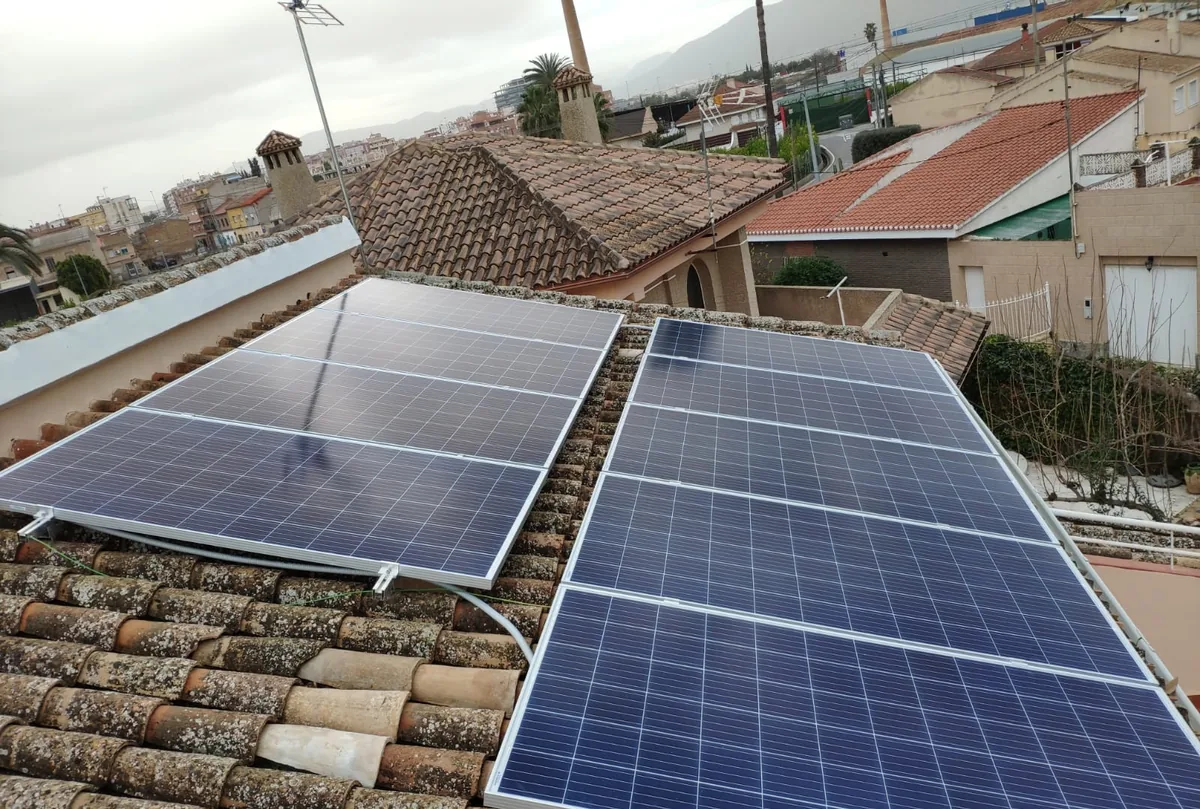
Panels installed near the sea face humid, salty air. That’s why there is a separate international standard, IEC 61701, that tests modules for salt mist corrosion — for modules operating in wet atmospheres with a high concentration of dissolved salt. For a villa near the coast, ask whether the panels have passed it. The mounting frame and screws face the same steel-and-salt story we covered in Steel or Concrete Frame.
Source: IEC 61701:2020 — Salt mist corrosion testing of PV modules
A few questions before going solar
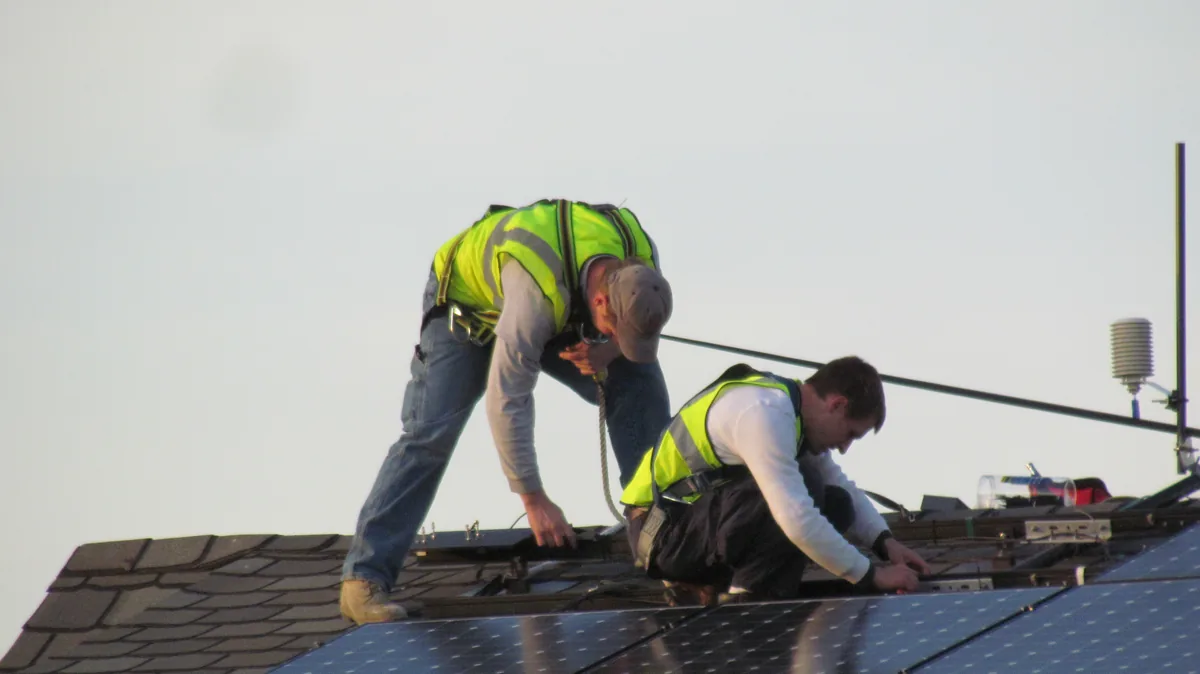
- How much unshaded space does the roof’s south slope have? Do trees or neighbouring buildings shade it?
- What’s the goal — lower bills, or backup power during outages? System and battery size depend on it.
- Have you got output figures from a tool like PVGIS for your plot’s actual coordinates?
- Have the panels passed the salt mist test (IEC 61701)? What are the mounts and screws made of?
- How will the roof penetrations be sealed?
In short
Solar works in the north: about 1,330 kWh a year per kilowatt, roughly 17% less than Tehran, with winter output around 60% of summer’s. But the biggest variable is in our own hands: the roof’s orientation and pitch. A roof designed from the start with an unshaded south slope can produce up to about 70% more than a north slope.
If you’d like a villa in Babol, Babolsar or Sarkhorud designed for solar from the start, get in touch.