

In Masuleh there’s a line that makes every architect stop and think: the yard of the house above is the roof of the house below. A village on the slopes of the Alborz at about 1,050 metres, with roughly 100 metres of height difference from bottom to top — and instead of fighting the slope, it has lived with it.
Sloping land for a villa usually looks like a headache at first: excavation, retaining walls, cost. But the same slope gives views flat land never will. There’s just one condition, and in Mazandaran it’s a serious one: the ground has to stay put.
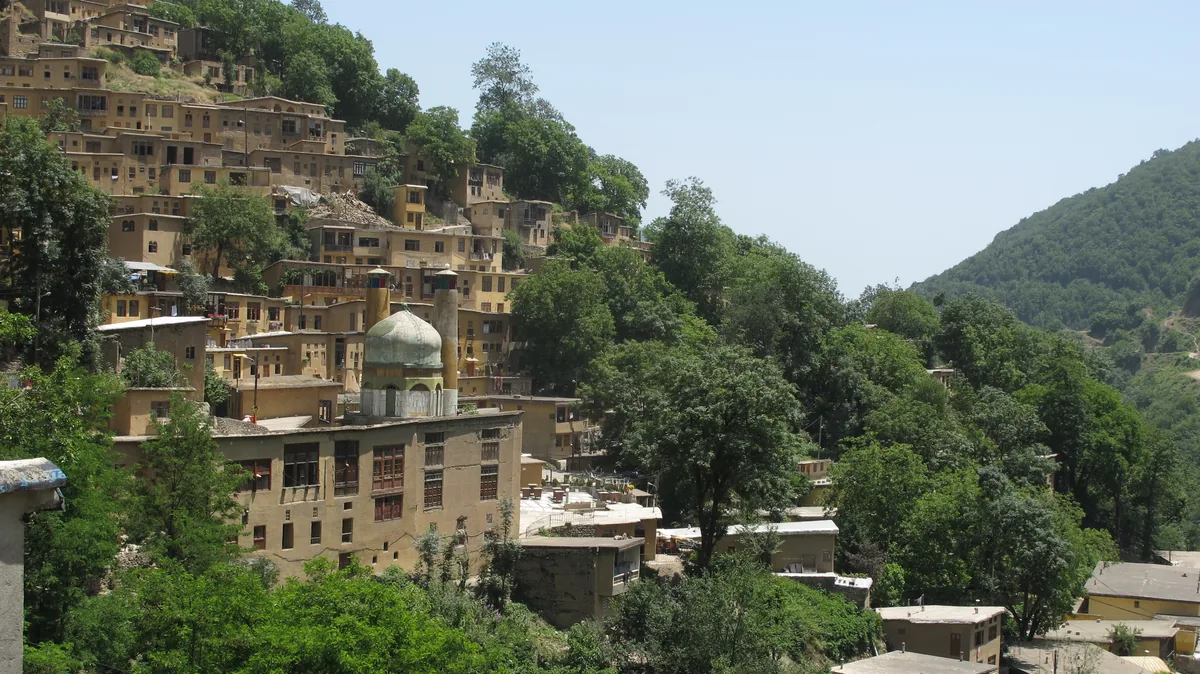
Source: Masuleh — Wikipedia
Mazandaran’s slopes move
An academic study (Omidvar and Kavian, 2013) used a statistical method to estimate the total number of landslides in Mazandaran at about 9,800 (give or take about 2,300) — many of them since erased from view by erosion, vegetation growth or human activity. The 2004 Baladeh earthquake showed this isn’t just a statistic: of at least 54 deaths, 28 were under landslides, not collapsed houses.
Sources: Omidvar & Kavian, estimating landslide number and area in Mazandaran (Iranian Journal of Range and Watershed Management, 2013); 2004 Baladeh earthquake — Wikipedia
What makes landslides more likely? A study of the Nekarud watershed (Sari University of Agricultural Sciences and Natural Resources) found landslide density rises with steeper slopes, loss of vegetation cover and higher soil permeability. Two of those three are exactly what careless construction changes: it cuts trees and sends water into the soil.
Source: Zali & Shahedi, landslide susceptibility in the Nekarud watershed (Persian)
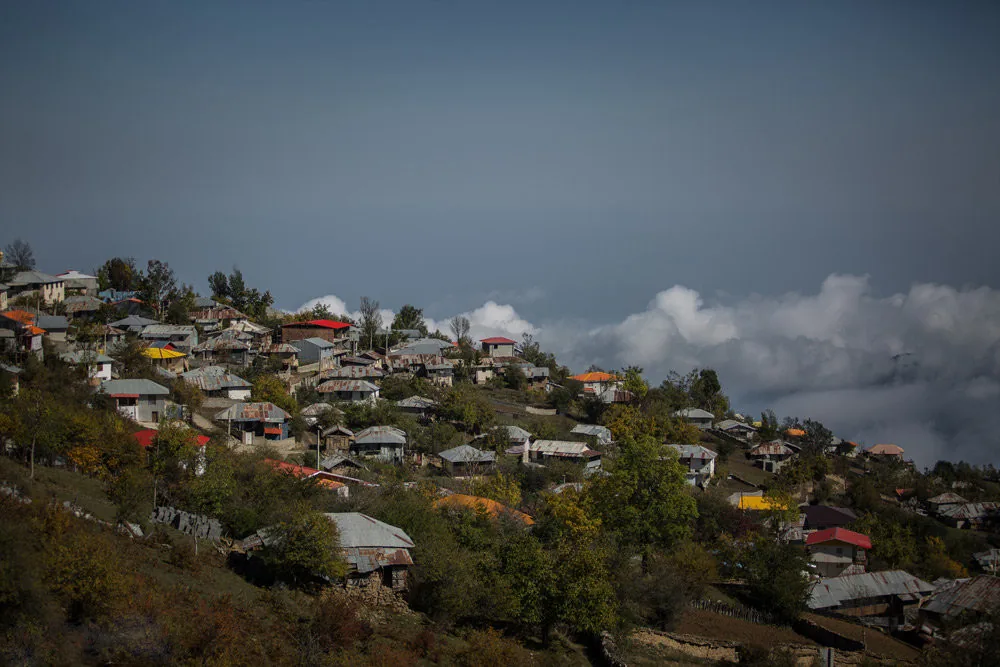
Three principles for sloping land
1. Build with the slope, not against it
The first temptation is to flatten the land and put an ordinary villa on it. But every extra metre of cut means a taller retaining wall, and every retaining wall is a pressure that has to be held forever. A villa that steps down the slope, like Masuleh, moves less earth. We also have a course on excavation and retaining structures in Excavation and Retaining Structures.
2. Manage the water
Water collecting behind a retaining wall creates pressure that grows with depth — the same hydrostatic pressure we put numbers on in High Groundwater and Foundations. Drainage behind the wall, leading roof and yard water away from the slope, and not dumping surface water onto it matter more than anything else. And remember: the Nekarud study counts water infiltration as a landslide factor.
3. Keep the trees
Roots hold the slope, and the same study counts loss of vegetation as a factor that increases landslides. So place the building where the fewest trees have to be cut; here architecture and stability say the same thing.
And the opportunities
- Views: each level gets its own view without blocking another’s.
- Entry from above: parking and the entrance can sit by the upper road, with the house below.
- Split levels: continuous spaces a few steps apart instead of separate floors.
- Usable roofs: the Masuleh idea — one part’s roof is another’s terrace.
5 questions before buying the land or designing
- Has a geotechnical and slope-stability study been done for this plot?
- Are there signs of old movement — leaning trees, ground cracks, a shifted road? (Building cracks are covered in Cracks in Your Walls.)
- Where does surface water from the land above go?
- How much excavation does the design need, and how many metres of retaining wall?
- How many trees have to be cut?
In short
Sloping land can give a villa its best view, but Mazandaran’s slopes move: an estimated 9,800 landslides, and half the deaths in the Baladeh earthquake under slides. Steeper slopes, fewer trees and more water in the soil all make slides more likely. So build with the slope, manage the water and keep the trees — what Masuleh has done for centuries.
If you have sloping land in the north and want a villa designed for it, get in touch.