


It usually starts like this: one evening you’re on the sofa, your eye drifts to the corner of the ceiling, and there’s a thin line you’re sure wasn’t there yesterday. From then on, every time you walk past, you check it. Has it grown? Or are you just looking harder? And late at night, the question arrives: “Is the house falling down?”
The good news is that the answer is almost always no. The better news is you don’t have to guess: there’s a yardstick engineers have used for years, and you can use it too.
First, a deep breath
The UK’s Building Research Establishment (BRE) publishes a well-known guide, Digest 251, written for exactly this moment: you’ve found a crack and want to know how serious it is. In the survey it refers to, about 70% of 140 cases fell into the light categories — cracks a bit of filler and paint will sort out. And the guide itself says damage rarely goes beyond that, and when it does, ground movement is usually the cause.
So we’re not meant to fear every line. We’re meant to learn which lines to take seriously.
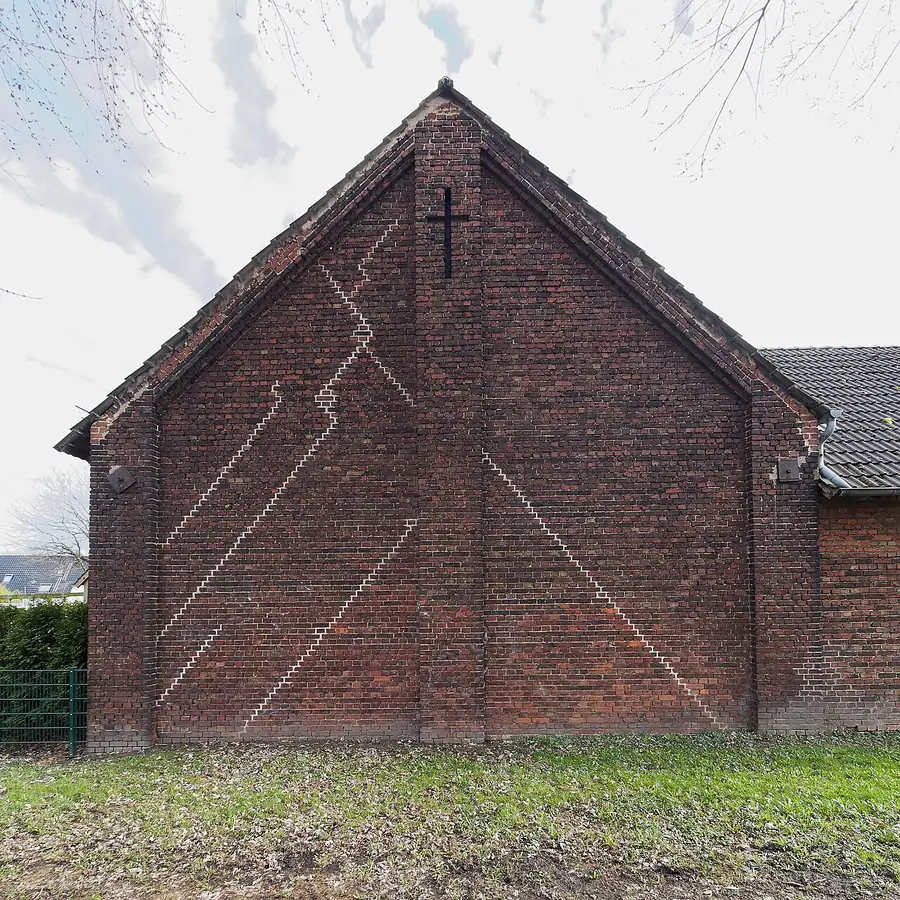
The BRE yardstick: six steps from hairline to danger
The guide sorts damage to walls into six categories. Its main criterion is interesting: not just the width of the crack, but how hard it is to repair.
| Category | Typical width | What it looks like | What it means |
|---|---|---|---|
| 0 | less than about 0.1 mm | hairline crack | negligible; no action |
| 1 | up to 1 mm | fine cracks, mostly in internal plaster | sorted by normal decoration |
| 2 | up to 5 mm | easily filled; doors and windows may stick slightly | fill, repaint, and keep an eye on it |
| 3 | 5–15 mm, or several of about 3 mm | doors and windows sticking, pipes may fracture | needs opening up and repair; time to talk to an engineer |
| 4 | 15–25 mm | floor noticeably sloping, wall leaning or bulging | extensive damage; sections of wall rebuilt |
| 5 | more than 25 mm | beams losing bearing, walls needing shoring | danger of instability; engineer immediately |
Source: BRE Digest 251, “Assessment of damage in low-rise buildings” (revised 1995); a summary of the same table — Nova Surveyors
The same guide also groups these six into three broader kinds: damage that only spoils the appearance, damage that impairs how the building works (doors jam, rain gets through, pipes break), and damage that threatens stability.
No ruler? You have a bank card
Under the international standard, bank cards are about 0.76 mm thick. So if the edge of a card slides easily into a crack, it’s no longer “hairline” — it’s at least category 1 or 2. For wider cracks, an ordinary ruler will do.
Source: ISO/IEC 7810 — Wikipedia
But width isn’t the whole story
BRE warns explicitly that crack width is “one factor” in the assessment and shouldn’t be used on its own. A single 3 mm crack is not the same as five of them side by side. A few other things to look at:
- Doors and windows: a door that closed easily last year and now needs a shove tells you more than any ruler.
- Sloping floors and leaning walls: per the same guide, a deviation of more than 1 in 100 — about a centimetre per metre — is normally clearly visible.
- The shape and direction of the crack: whether one end is wider than the other (a tapering crack), or the two sides have shifted relative to each other, is a clue for an engineer about which way the building has moved.
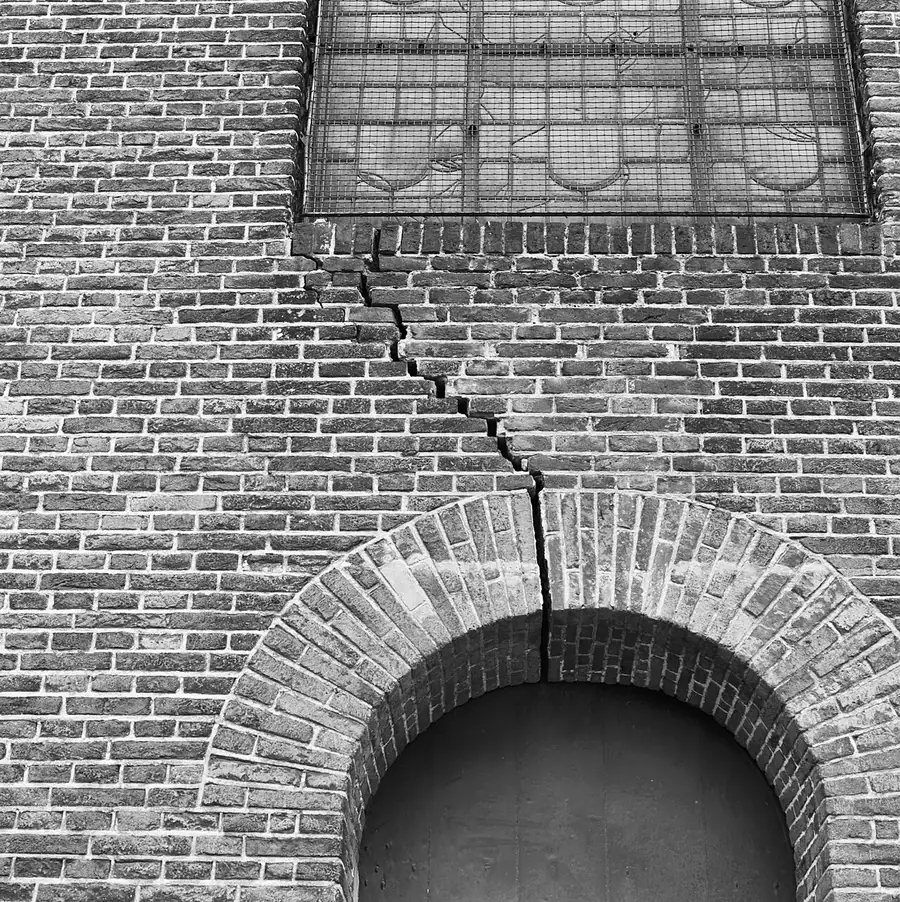
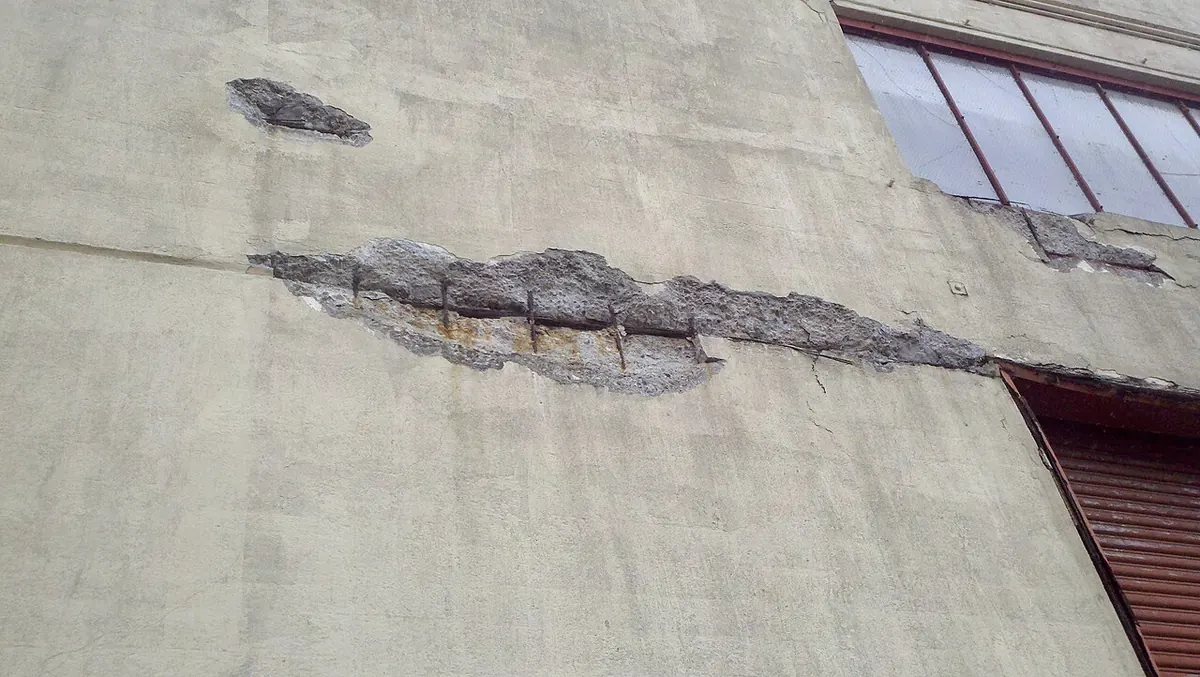
And one important point: this yardstick is for brick and block walls, not for concrete beams and columns — the guide says so itself. So if you see a crack in a concrete beam or column, especially with a rust stain beside it, its size doesn’t matter; an engineer should look at it.
Is the crack new or old?
A simple trick from the same guide: look at the edges. A fresh crack in brickwork has clean edges; an old one has dirt settled in it. That line you’re “sure wasn’t there yesterday” may have been there for years, and you only noticed it tonight.
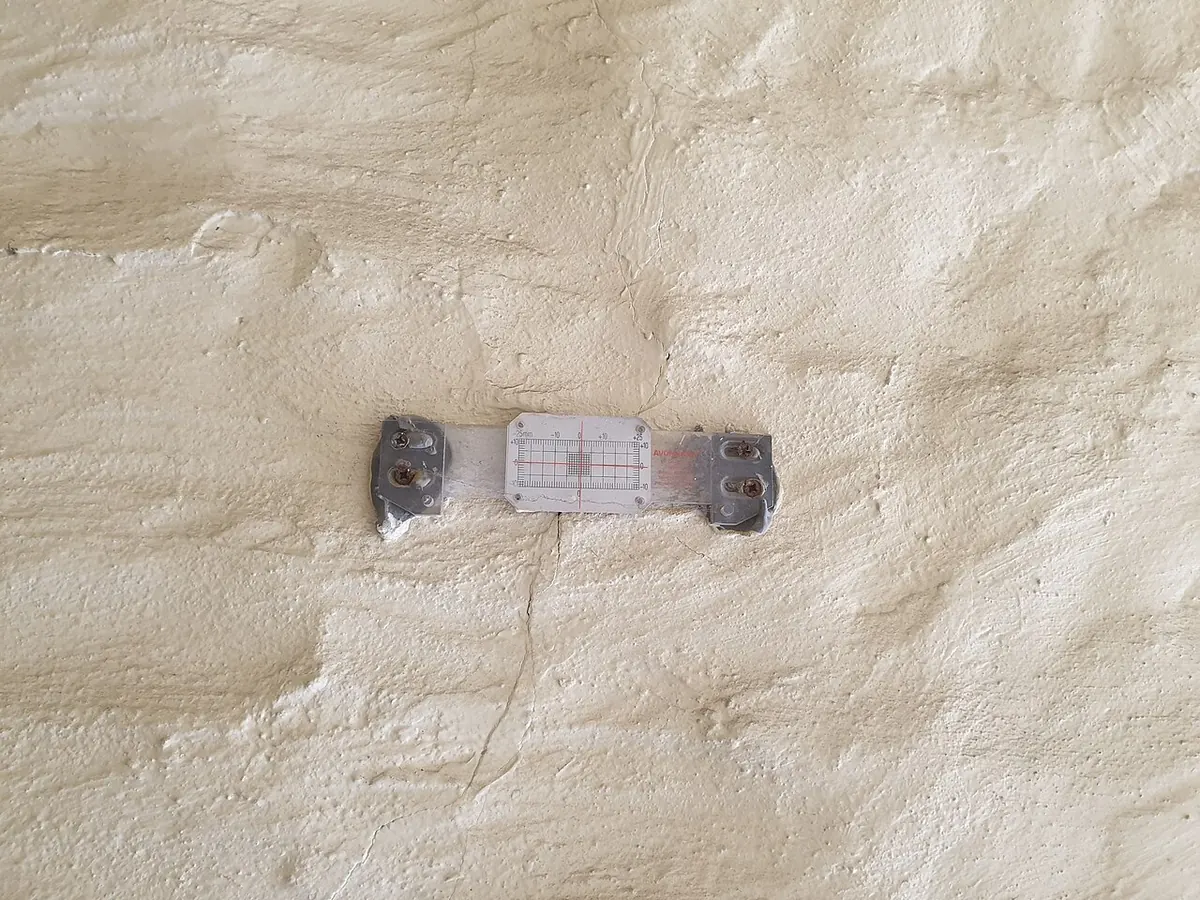
Then the simplest way to monitor it: mark both ends of the crack in pencil, write the date beside them, and take a photo with a ruler. Look again a few weeks later. A crack that’s stayed put is one story; a crack that has crept past your pencil mark or widened is another.
Familiar cracks, and the story each one tells
A straight line beside a column or under a beam
One of the most common cracks in Iranian buildings is a straight vertical line exactly where a brick wall meets a concrete column, or a horizontal one under a beam. Its story is usually simple: two different materials move by different amounts with heat and moisture, and the joint between them opens. BRE also lists “shrinkage of concrete products” and “differential thermal expansion of dissimilar materials” among the causes of cracks that have nothing to do with the ground. These are usually cosmetic — but if they come back after every repaint, that joint needs proper detailing.
Where an added part meets the main building
A room added later, a porch, or anything projecting from the main body usually sits on a separate foundation and behaves in its own way. BRE notes that such parts are especially prone to slight cracking right where they join the main structure. If your crack runs exactly along that line, it’s probably the story of two buildings living slightly apart.
Cracks low on walls and in floors
If the cracks are mostly low on internal walls and in the floor, there’s a usual suspect: the fill under the floor wasn’t compacted properly. BRE names this as a common cause of damage — the floor slowly settles on loose fill, and the walls on it crack.
The pipe that’s been leaking for years
This one is very familiar on coastal land. BRE says that in silty and sandy soils, a leaking water or drain pipe can, over years, slowly wash away fine soil particles and cause localised settlement under one corner of a building. And the hopeful part: repairing the pipe stops the settlement. So if one corner of the house has cracked and that same corner is always damp, check the pipes first. Why soil and water matter so much on the coastal strip is explained in high groundwater and foundations.
Cracks that open and close with the seasons
BRE explains that on clay soils, shallow foundations move slightly with the seasons, producing light cracks that open and close through the year. They may be unsightly, but they’re usually easily masked. What sets them apart from dangerous cracks is that they come and go, rather than heading one way, towards worse.
When not to wait
If you see any of these, it’s time for a structural engineer or an architect to look at the building:
- a crack wider than about 5 mm, or several of about 3 mm close together;
- doors and windows that have just started sticking;
- a floor or wall that looks visibly out of true;
- a crack that has crept past your pencil mark or widened;
- any crack in a concrete beam or column, especially with rust staining;
- any new crack after an earthquake.
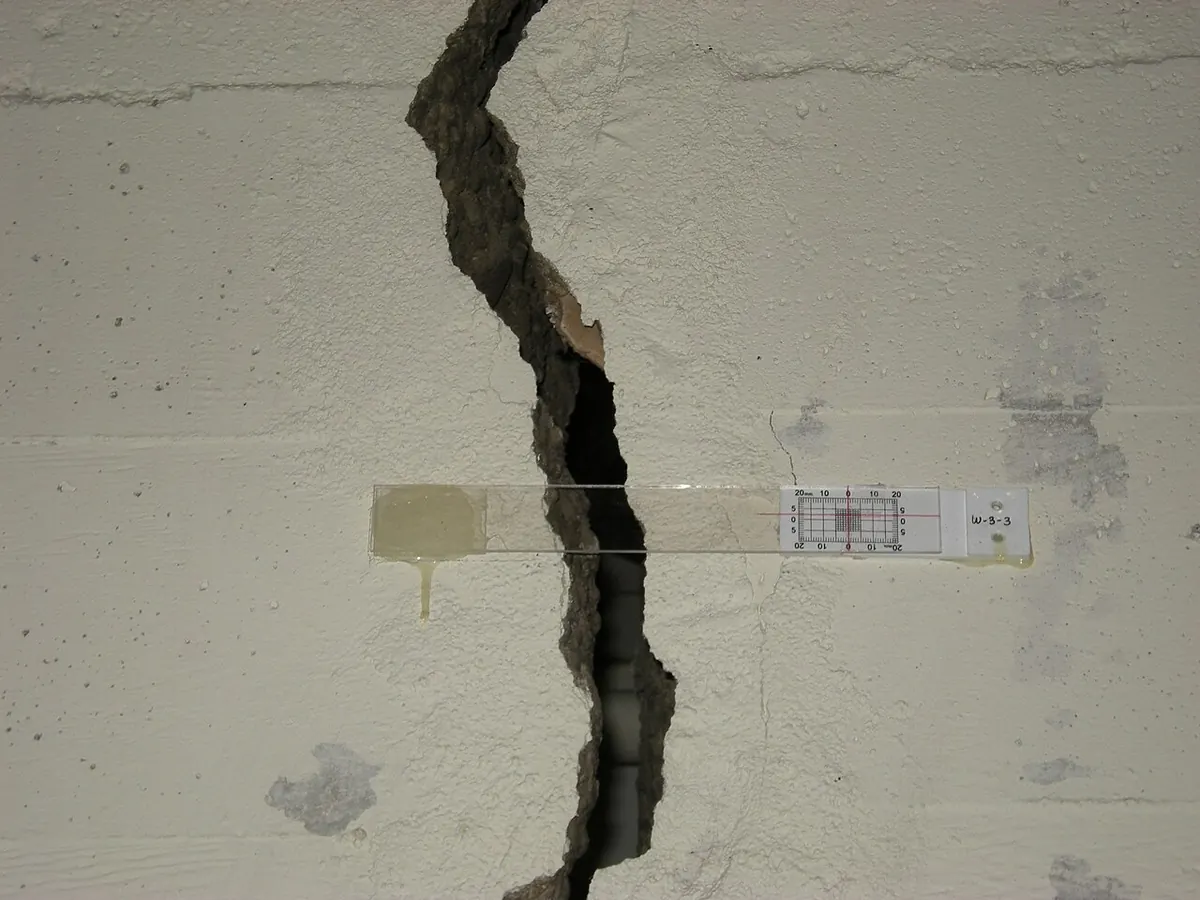
And if all your cracks are fine, old and stable? It’s probably just time for some filler and fresh paint. If they come back after painting with damp stains, the story is more about moisture than structure; we explain it in humidity, condensation and mould in northern villas.
If you’re buying a finished villa
Cracks are a building’s best storytellers. On a viewing, instead of just asking “are there any cracks?”, ask “how long has this crack been here, and has it grown since?” And look at the edges: clean or dirty? Freshly painted or not? Everything else to check before you sign is in buying a finished villa in northern Iran.
In short
Most cracks are just a line in the plaster. The BRE yardstick helps you place yours in a category, but width isn’t the whole story: doors and windows, floor slope, the shape of the crack and, above all, whether it’s getting bigger are what separate the frightening from the ordinary. Paint over a fine, stable crack; take a moving one seriously.
This article doesn’t replace an engineer’s visit; it just helps you know when you need one. If a crack in a building in Babol, Babolsar or Sarkhorud is worrying you and you’d like an architect to take a close look, get in touch.



No comments yet. Be the first.