


A January morning in Babolsar. You pull back the curtain and the first thing you see is water: the bottom of the glass is covered in droplets, a line of water sits along the lower edge of the frame, and the silicone in the corner is slowly turning black. You put your hand on the frame. It’s cold — much colder than the room.
Plenty of villas on the Caspian coast know this scene, and it’s usually where the old argument starts: “Are uPVC windows better, or aluminium?” One person says aluminium is cold, get uPVC. Another says thermal-break aluminium beats uPVC anyway. The funny thing is that both are right about something. Let’s use numbers to see what.
One number that explains half the story
Thermal conductivity is how easily a material lets heat through. The aluminium alloy usually used for window frames (6063) has a conductivity of about 201 to 218 W/(m·K). Rigid PVC, the stuff uPVC frames are made of, is about 0.14 to 0.28. So aluminium passes heat roughly 700 to 1,500 times more readily than PVC.
Put a metal spoon in hot tea and a few seconds later the handle is hot. A plastic spoon doesn’t do that. A solid aluminium frame is that metal spoon, in reverse: it carries the outdoor cold straight to the inside face of the frame. The Efficient Windows Collaborative, an American reference on energy-efficient windows, says plainly that aluminium’s biggest drawback as a frame material is this high conductance, and that in cold weather a simple aluminium frame can easily get cold enough for moisture, or even frost, to form on its inside surfaces.
Sources: 6063 aluminium alloy — Wikipedia; Polyvinyl chloride — Wikipedia; Efficient Windows Collaborative — Metal Frames
Why does it sweat so quickly in the north?
Babolsar’s average daily minimum in January is about 5.4°C. Now imagine the villa is at 20°C inside with 60% relative humidity — not an unusual figure for a home where people cook, shower and dry laundry. The dew point of that air is about 12°C. Any surface in the room colder than 12°C will collect water.
On a 5°C night, a frame that conducts cold like a wire drops below 12°C without much trouble. You’ll see the rest on the frame in the morning. We explained what the dew point is, and why it matters so much in the north, in Humidity, Condensation and Mould in Northern Villas.
Sources: Babolsar — Wikipedia (1991–2020 normals, NOAA); dew point by the Magnus formula: Alduchov & Eskridge, 1996
What is a thermal break?
The fix for aluminium is simple: split the frame in two and join the halves with something that conducts poorly. That split is the “thermal break”. The most common material for it is polyamide strip reinforced with glass fibre (PA66 GF25). According to the data sheet of one of the main makers of these strips, its thermal conductivity is 0.30 W/(m·K) — about 700 times lower than aluminium’s. Now the cold has to cross a plastic bridge instead of a solid piece of metal.
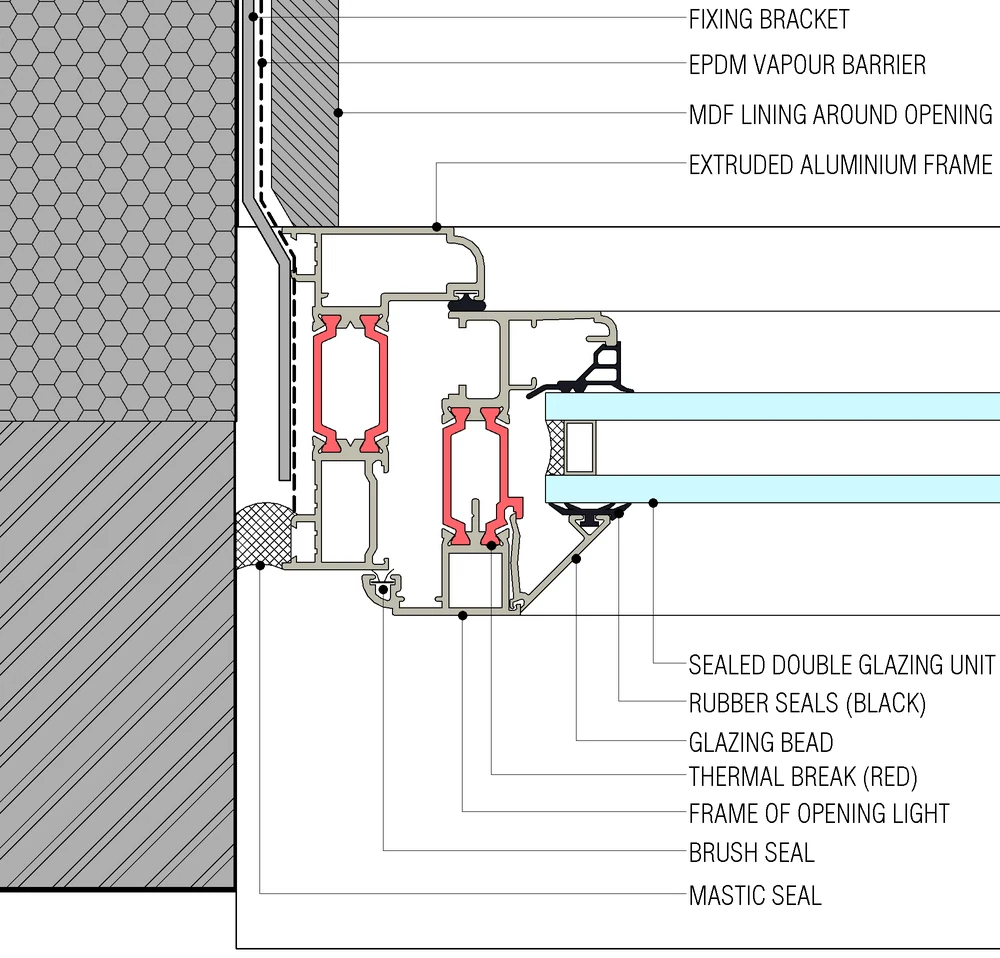
Not all thermal breaks are equal, though. The table we’ll get to below adjusts metal windows by the width of the break: from 0.3 worse for a frame with no break to 0.4 better for a 32 mm strip, compared with a 4 mm one. So the right question isn’t just “does it have a thermal break?” but also “how wide is the strip?”
Sources: Technoform — Material data sheet, PA 66 GF25; SAP 10.2, Table 6e, Note 3
So uPVC wins? Not that simply
Here a second number comes in: U. The U-value tells you how much heat escapes through each square metre of window for every degree of difference between inside and outside. Lower is better.
The UK’s official method for rating home energy use (SAP 10.2) has a table for when a window’s exact specification isn’t known. Its figures are for the whole window, frame and glass together. Here are a few of its figures side by side:
| Frame | Plain double glazing (12 mm air) | Low-E double glazing with argon (16 mm) |
|---|---|---|
| uPVC | 2.8 | 1.7 |
| Aluminium, no thermal break | 3.7 | 2.4 |
| Aluminium, 4 mm thermal break | 3.4 | 2.1 |
| Aluminium, 20 mm thermal break | 3.1 | 1.8 |
Source: SAP 10.2 (BRE, 2023), Table 6e; values in W/m²K. The “no thermal break” and “20 mm” rows apply the adjustments in Note 3 of the same table.
Three things come out of this table:
- With the same glass, uPVC is always ahead. In both columns the lowest figure is uPVC’s.
- But the glass makes a bigger difference. The same table gives a uPVC window 4.8 with single glazing and 2.8 with plain double glazing — two whole units better. Swapping an unbroken aluminium frame for uPVC with the same glass changes things by less than one unit (3.7 to 2.8).
- Good aluminium beats ordinary uPVC. Aluminium with a 20 mm break and argon-filled Low-E glass scores 1.8; uPVC with plain double glazing scores 2.8.
The reason is simple: the frame and sash usually make up only 10 to 30% of a window’s area. The rest is glass. If you’re going to obsess over one thing, make it the glass.
And to be fair: these are cautious default values. The same guide says that where a manufacturer has a certified U-value for its window, that figure takes precedence. So ask the supplier for the whole-window U-value (Uw), not just the glass figure.
Source: Efficient Windows Collaborative — Frame Types
The edge of the glass: where uPVC sweats too
If you think uPVC means no more droplets, take a look at this photo.
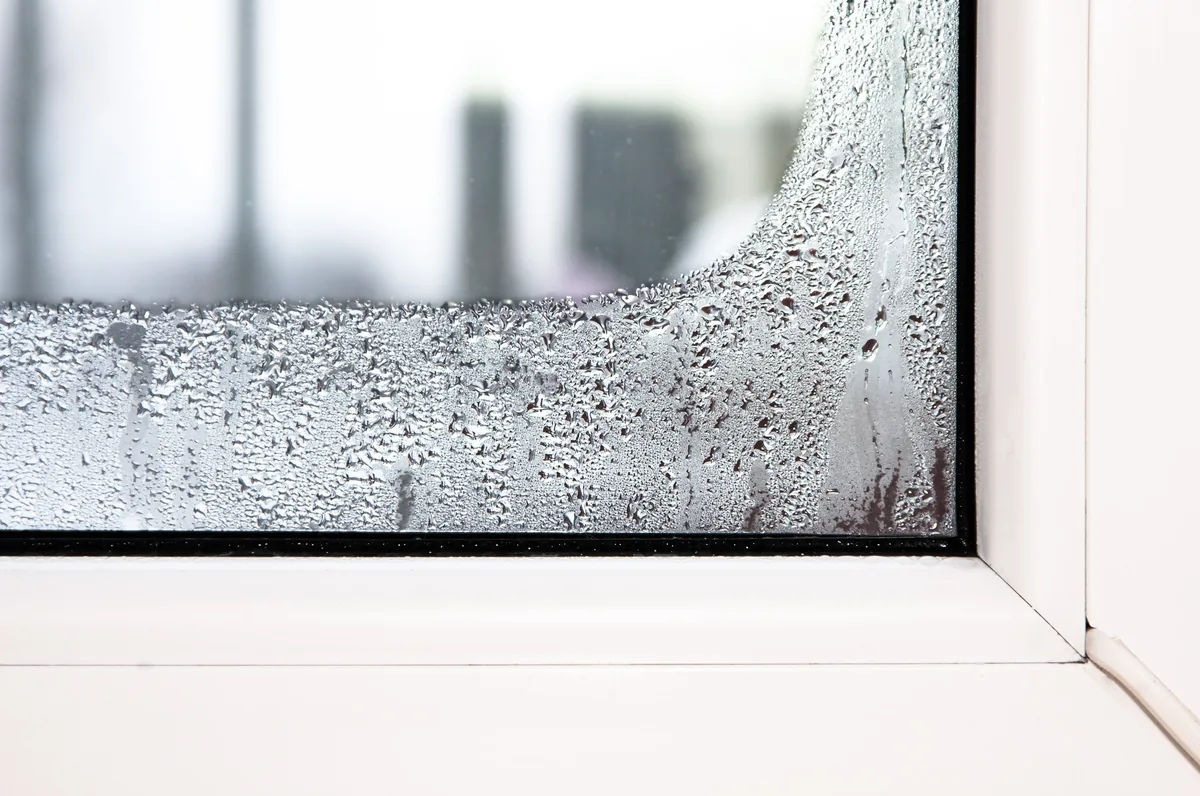
The two panes of a double-glazed unit are held apart by a strip called a spacer that runs all the way round the edge. Older, cheaper spacers are aluminium or steel, and the frame story repeats itself: the metal conducts cold, and water or even ice can form at the bottom of the glass. The answer is “warm edge” spacers, made of less conductive materials or with a thermal barrier of their own. When you order, ask what your spacer is made of.
One more tip for anyone buying a ready-built villa: if the mist is between the two panes rather than on the inside surface, the frame isn’t to blame. It means the seal around the unit has failed and the desiccant inside is saturated, and usually the only cure is replacing the glass unit. Add it to your viewing list, alongside everything in Buying a Ready-Built Villa in Northern Iran.
Source: Insulated glazing — Wikipedia
The north sets one more test: salt
Babolsar, Sarkhorud and the rest of the coastal strip aren’t just humid; their air carries salt. The Caspian is less salty than the open seas, but it isn’t salt-free (more on that in Steel or Concrete Frame for a Villa in Northern Iran). So both kinds of window face an extra question.
Aluminium: the sea isn’t the enemy, the scratch is
It may sound surprising, but anodised aluminium copes with the sea quite well. Qualanod, the European quality body for anodising, says the finish has been used on building exteriors since the 1930s, and some of those buildings are now about 80 years old with their aluminium still in good condition. In outdoor tests lasting up to 20 years, anodic coatings in urban areas lost 0.2 to 0.4 microns of thickness a year — and in marine areas, the same or slightly less.
Most aluminium frames today, though, are powder-coated. Their trouble in salty air is something called filiform corrosion: it starts at a scratch or a cut edge and creeps under the paint in worm-like threads.
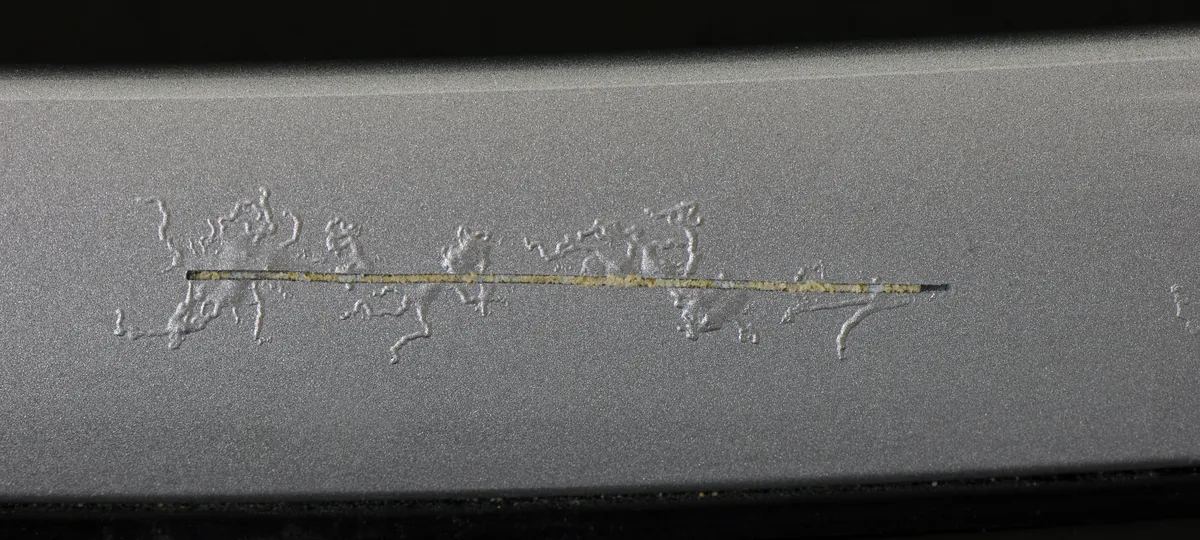
That’s why Qualicoat, the international quality label for powder coating on aluminium, has a separate Seaside endorsement that includes testing for exactly this filiform corrosion. In this class the surface preparation before painting goes deeper — the minimum amount of aluminium etched off the surface rises from 1 to 2 grams per square metre — and it’s typically recommended for buildings within about 5 km of the coast. For a villa in Babolsar or Sarkhorud, that’s precisely the question to put to the profile maker or the coater.
Sources: Qualanod — Architectural applications; QUALICOAT — Specifications; EN ISO 4623-2; Glass Times — Qualicoat Seaside Class
uPVC: the plastic doesn’t rust, but there’s steel inside
PVC doesn’t rust, but a uPVC profile isn’t on its own: a steel section usually sits inside its main chamber. REHAU, one of the big makers of these profiles, says in its guide that the steel is there both for strength and to limit the profile’s expansion and contraction with temperature, especially when the profile is foiled in a colour.
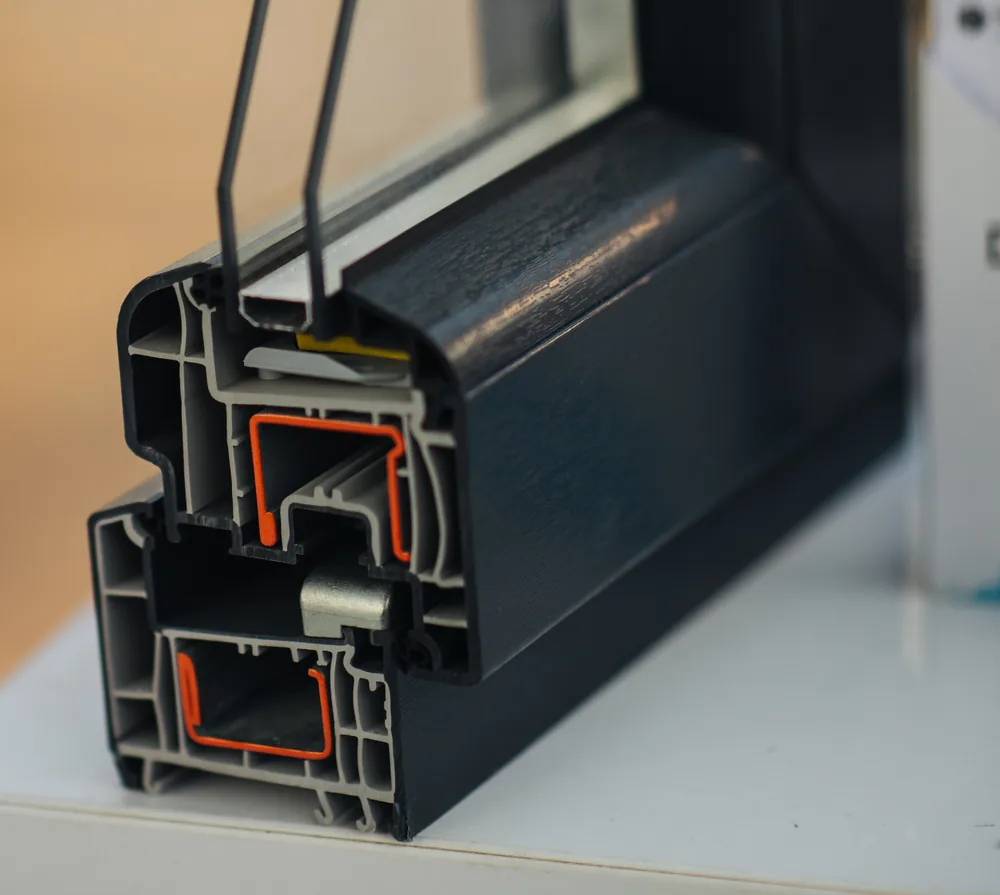
Why does expansion matter? Rigid PVC’s coefficient of thermal expansion is about twice aluminium’s. Imagine a 2-metre frame that sees a 40-degree swing between a winter night and a sunny summer noon: the PVC grows and shrinks by about 4 mm, the aluminium by less than 2 mm. The steel inside the profile holds that movement in check.
And this is where salt shows up again. The same REHAU guide says steel with a Z275 zinc coating (about 20 microns) gives at least 10 years before any corrosion starts, whereas cheaper steel with a Z140 coating (about 10 microns) or less can start showing corrosion through the profile after just a few years. That’s a manufacturer talking, but asking costs you nothing: is the steel in the profile galvanised, and to what class?
There’s one more thing: sunlight. PVC needs UV stabilisers so the sun doesn’t break it down, and poor-quality white PVC yellows with age. You can’t judge that by eye in the showroom, which is why the profile’s maker and certification matter.
Sources: REHAU — The use of reinforcement in UPVC windows and doors; Polyvinyl chloride — Wikipedia; 6063 aluminium alloy — Wikipedia
One more difference: stiffness
The elastic modulus of 6063 aluminium is about 69 GPa; rigid PVC’s is about 3.4. Aluminium is roughly 20 times stiffer. In villa terms: if you want a big sliding door facing the sea or the forest, with slim frames, aluminium gives you more freedom. uPVC leans more heavily on its internal steel for the same opening.
So, which one?
- Aluminium without a thermal break: no. For a villa you heat in winter and cool in summer, it’s the one option the numbers rule out easily.
- uPVC works well when the windows are of ordinary size and insulation is your priority — provided the profile comes from a reputable maker and the steel inside is properly galvanised.
- Thermal-break aluminium works well for large openings, slim frames or dark colours — provided the break is wide and the finish is rated for the seaside (Seaside), or anodised.
- Either way, take the glass seriously: Low-E double glazing, argon fill and a warm-edge spacer.
A few questions before you sign the window contract
- What is the whole-window U-value (Uw), and where does it come from? Is there a test certificate?
- Is the glass Low-E? Is it argon-filled? What is the spacer made of?
- If aluminium: does it have a thermal break? How wide is the strip? Is the coater Qualicoat certified (with Seaside), or is the profile anodised?
- If uPVC: who makes the profile? Is the steel inside galvanised, and to what class?
- How is the joint between frame and wall sealed? Even the best profile lets water and air past its edges if it’s badly installed.
In short
Plain aluminium really is cold: it passes heat hundreds of times more readily than PVC, and northern winter mornings will show you on the frame. A thermal break solves most of that, and the official figures show that good thermal-break aluminium with good glass outperforms uPVC with ordinary glass. So the real contest isn’t uPVC versus aluminium; it’s a good window versus an ordinary one — and a big part of that is the glass.
The size, orientation and placement of windows matter as much as what they’re made of, and those are settled on day one of the design. If you’re designing or renovating a villa in Babol, Babolsar or Sarkhorud and want the windows chosen right from the start, get in touch.


No comments yet. Be the first.