

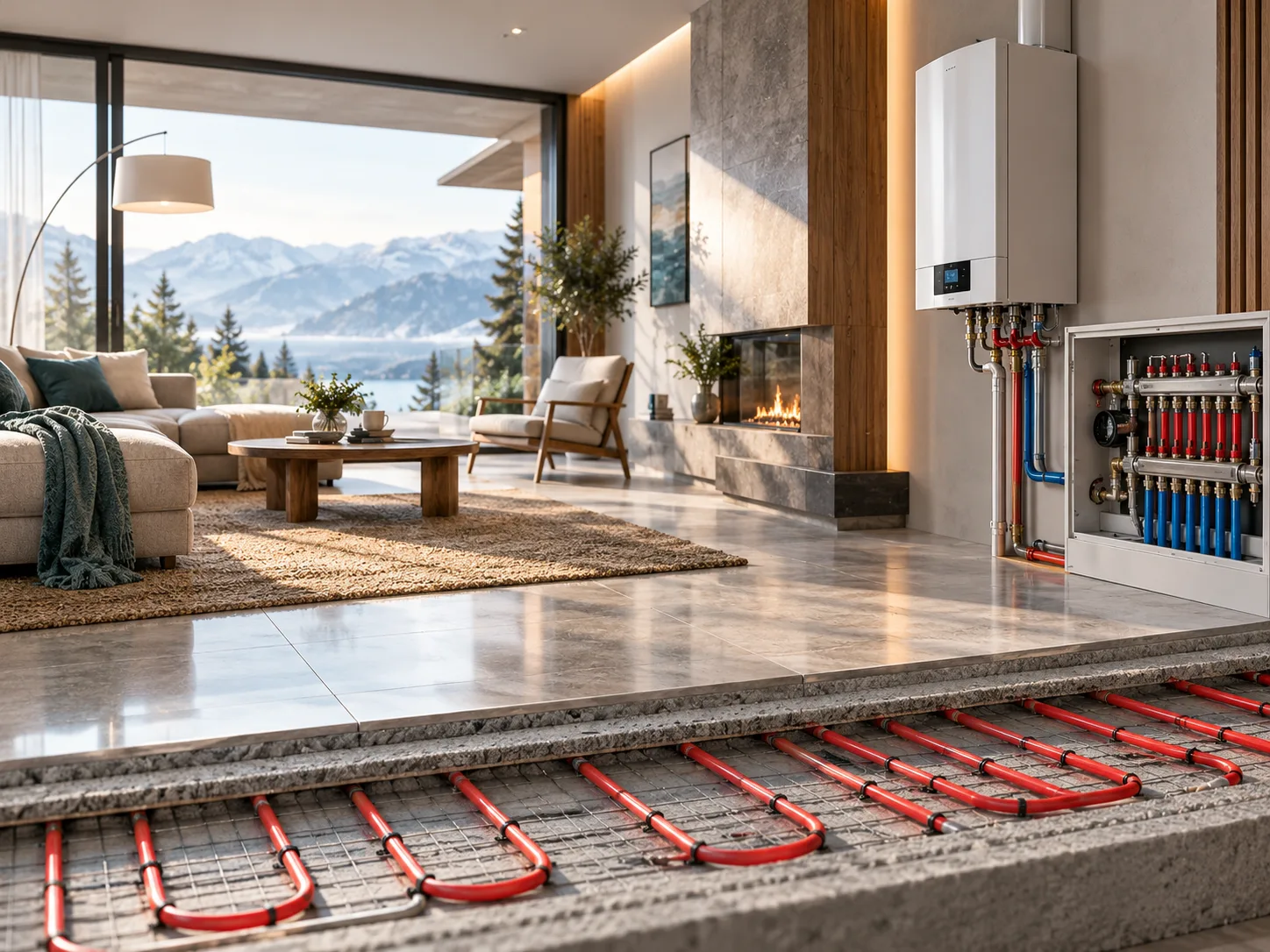
In Tehran the heating question is usually simple: a combi boiler and radiators. In the north the same question gets more interesting. Winters are short and mild, humidity is ever-present, summers need air conditioning, and many villas are only switched on at weekends. So before picking a boiler brand, let’s see what the northern climate favours.
The northern winter, in numbers
Babolsar’s mean January temperature is 8.5°C, with an average daily minimum of 5.4°C. The northern winter is cold, but not the hard cold of the plateau. Remember that number; it helps one system a lot.
Source: Babolsar — Wikipedia (1991–2020 normals, NOAA)
Heat pumps: built for mild air
A heat pump doesn’t make heat; it moves it from the outdoor air — the reverse of what an air conditioner does in summer. Its measure is the coefficient of performance (COP): how many units of heat it delivers per unit of electricity. An electric heater has a COP of 1; a well-designed heat pump, according to Wikipedia, typically has a COP of 3 to 5 at 10°C outside and 20°C inside — three to five times the heat for the same electricity.
The key is the next point: heat pumps work best when the temperature difference between outside and inside is small, so they perform best in moderate climates and lose efficiency as it gets colder. Now look again at Babolsar: a January mean of 8.5°C, very close to that 10°C reference.
There’s a northern detail too: in damp air near freezing, ice forms on the heat pump’s outdoor coil and the unit melts it in a “defrost” cycle. So the outdoor unit needs a spot where defrost water can drain away and won’t freeze across a path.
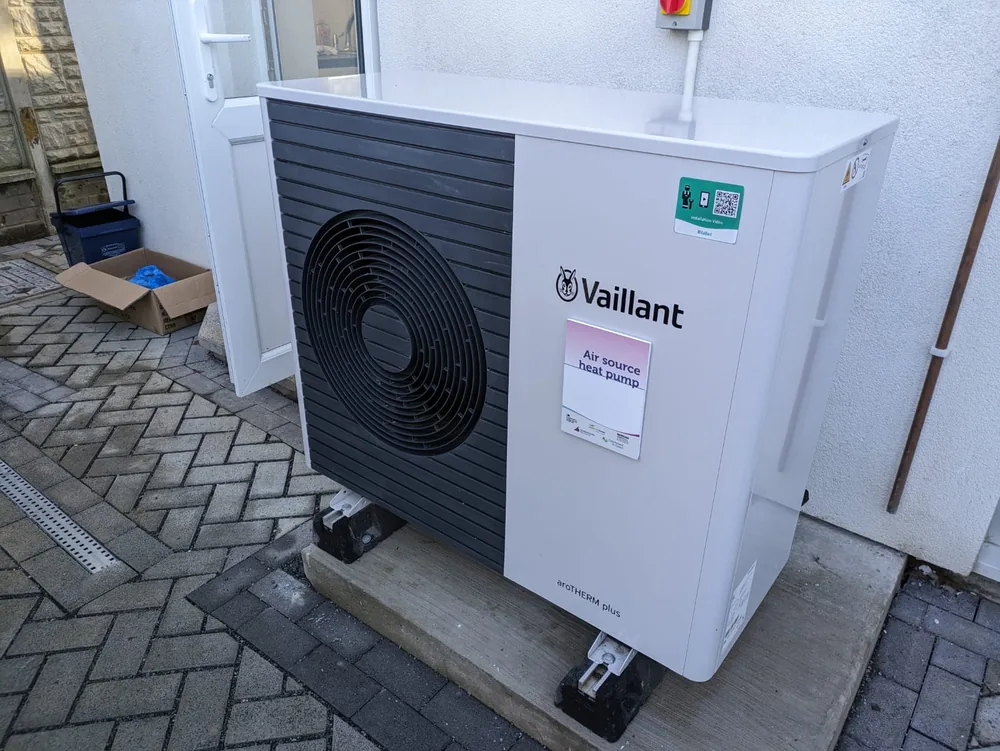 The outdoor unit of an air-to-water heat pump by a house in England, raised on feet so defrost water doesn’t pool beneath it. Photo: Southend-on-Sea Borough Council — Wikimedia Commons, public domain (resized)
Source: Heat pump — Wikipedia
Underfloor heating: a heat pump’s friend, with one condition
Underfloor heating runs on lukewarm water, not hot. Wikipedia notes that this low water temperature is what makes underfloor heating particularly suitable for heat pumps, since it raises their efficiency. The two make a good pair.
But an important warning for the north: some people use the same floor pipes for summer cooling. The same source says that with underfloor cooling, condensation may collect on the floor surface; to prevent it, air humidity is kept below 50% and the floor above the dew point. In a northern summer at around 80% humidity, underfloor cooling without serious dehumidification means a wet, slippery floor. The logic is in Humidity, Condensation and Mould.
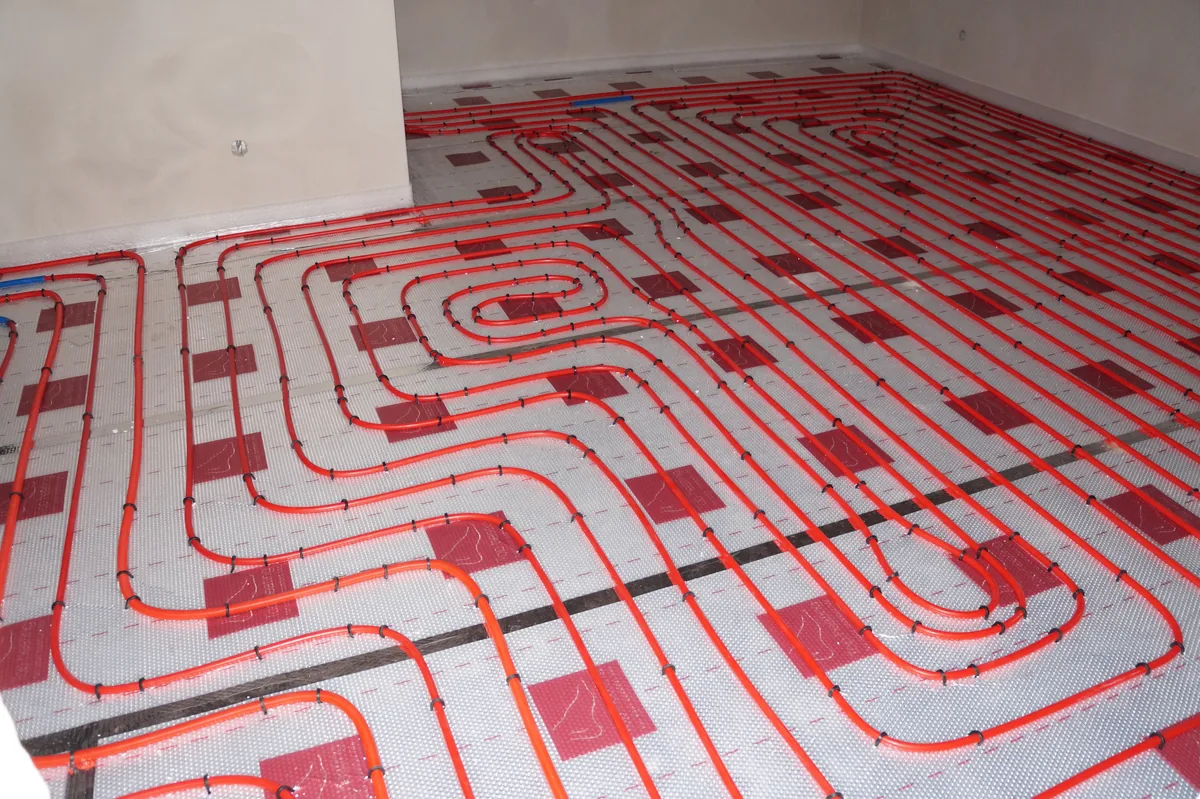 Underfloor heating pipes laid on insulation board before the screed. Once it’s poured you’ll never see them again — keep an accurate plan. Photo: Kiwiev — Wikimedia Commons, public domain (resized)
Source: Underfloor heating — Wikipedia
Boilers: if gas, condensing
If you go for a gas boiler, a “condensing” type also condenses the water vapour in its flue gases and recovers that latent heat, reaching efficiencies above 90%. But only on one condition: the system’s return water must be around 55°C or below. So a condensing boiler also works best with underfloor heating or larger, lower-temperature radiators.
Source: Condensing boiler — Wikipedia
The weekend villa
A question few people ask: how often will you use the villa? Underfloor heating with a screed on top warms a lot of mass; that’s great for a home that’s always occupied, but for a villa you switch on when you arrive for the weekend, it’s slow to warm up. Either start it early by remote control, or give part of the heating to a faster system.
So, which one?
- Permanently occupied villa, reliable electricity: an air-to-water heat pump with underfloor heating; the mild northern winter favours it, and it can cool in summer too (with fan coils or a dehumidifier, not the bare floor).
- Permanently occupied villa, on gas: a condensing boiler with underfloor heating or low-temperature radiators.
- Weekend villa: a system that heats quickly, or remote control to switch it on a few hours ahead.
- In every case: insulation and the right windows first; no system makes up for heat escaping through the envelope.
In short
The mild northern winter, with a January mean of 8.5°C, is exactly where heat pumps do their best work, and underfloor heating is their natural partner. But northern humidity makes underfloor cooling risky, and a weekend villa needs a faster system. The right choice starts with how you’ll use the house, not with a catalogue.
If you’re designing a villa in Babol, Babolsar or Sarkhorud, get in touch.




No comments yet. Be the first.