


A northern villa, a rainy weekend, four people inside. A shower in the morning, a pot of soup on the stove at noon, a load of laundry in the evening that — because it’s raining — gets hung up indoors. By night there are droplets on the windows and a dark patch in the bathroom ceiling corner that wasn’t there last week.
Where does it come from? The short answer: from the water we put into the air ourselves. The long answer, with numbers, is this:
How much water does a family of four put into the air each day?
In a classic digest on moisture problems in houses, Canada’s National Research Council estimated that an average family of four generates 7 to 12 litres of water on an ordinary day, rising to over 23 litres on wash days. Its table:
| Moisture source (family of 4) | Litres |
|---|---|
| Clothes drying indoors, unvented | 11.97 |
| Clothes washing, unvented | 1.96 |
| Floor mopping (7.4 m²) | 1.09 |
| Cooking, unvented (add 1.24 L if gas) | 0.92 |
| Dishwashing | 0.45 |
| Shower | 0.23 |
Source: NRC Canada, CBD-231 “Moisture Problems in Houses” (A.T. Hansen)
One thing jumps out: laundry dried indoors outweighs every other source. And in the north, with around 105 rainy days a year in Babolsar, laundry naturally ends up drying indoors a lot. So the drying space needs designing too, not just the bathroom and kitchen.
Source: Mazandaran Meteorological Office — Babolsar climate
Kitchen: the hood needs a way out
The residential ventilation standard ASHRAE 62.2 asks for local kitchen exhaust of 100 cfm (50 L/s), and states that if the fan delivers less than 5 kitchen air changes an hour, a vented range hood is required. For bathrooms the figure is 50 cfm (25 L/s).
Source: ASHRAE 62.2-2010, Addendum m, Table 5.1
This is where many hoods fall short. “Ductless” (recirculating) hoods pass air through a filter and return it to the kitchen. Green Building Advisor puts it precisely: a recirculating fan may filter grease and odours but doesn’t remove humidity. The same source recommends a solid galvanised steel duct the same diameter as the hood outlet, on a direct path to the exterior.
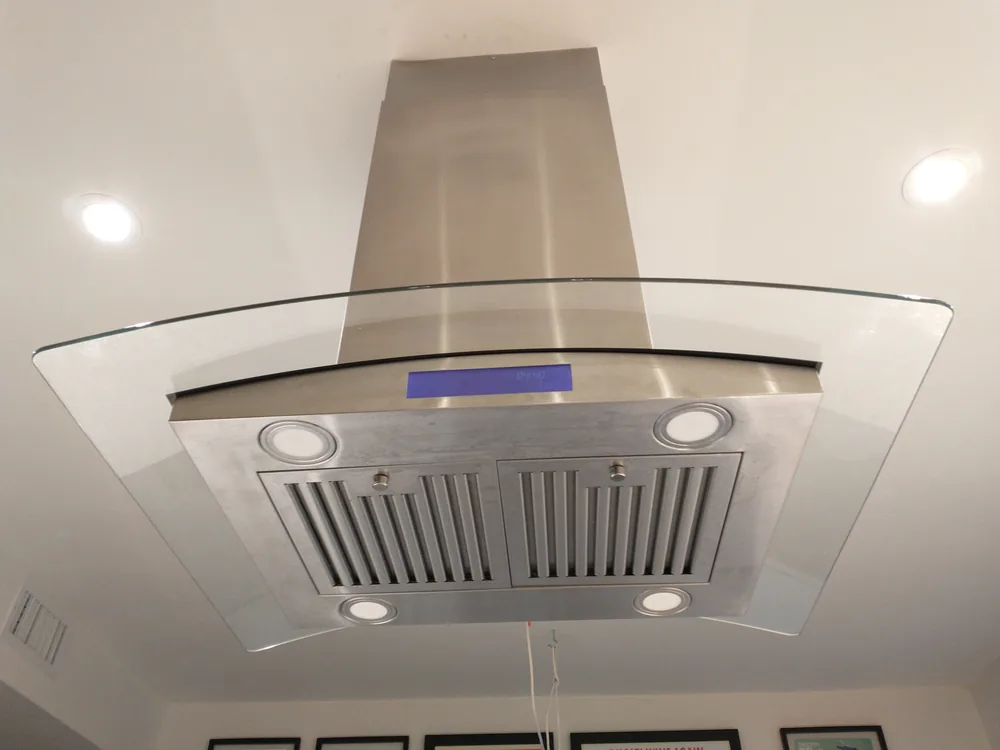
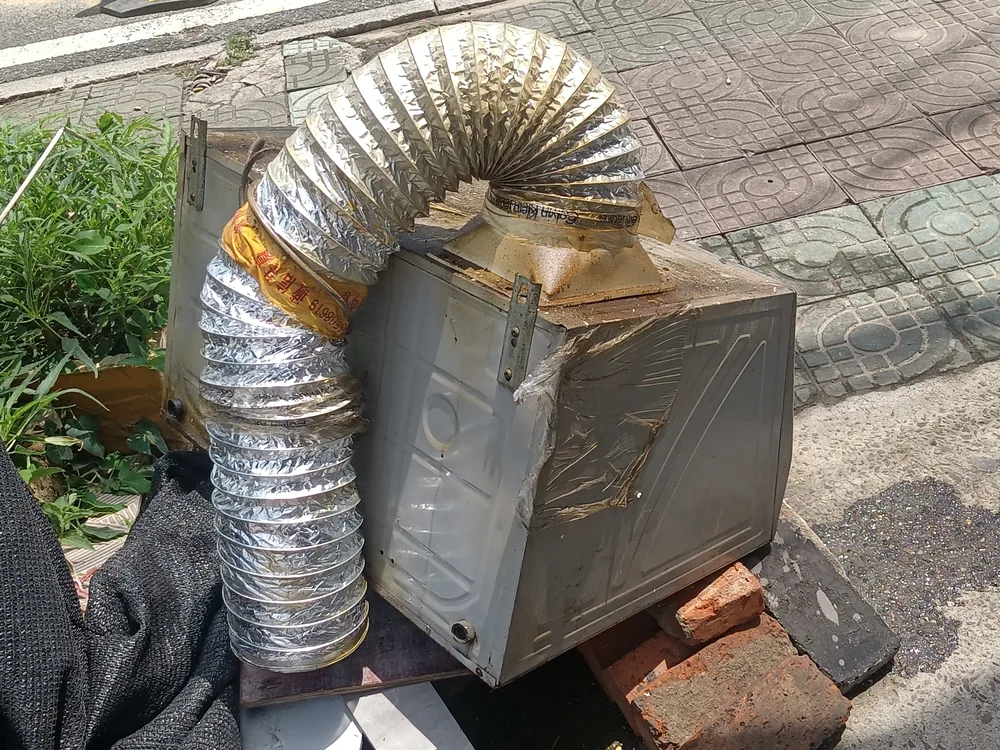
Source: Green Building Advisor — Four Components of Kitchen Exhaust Systems
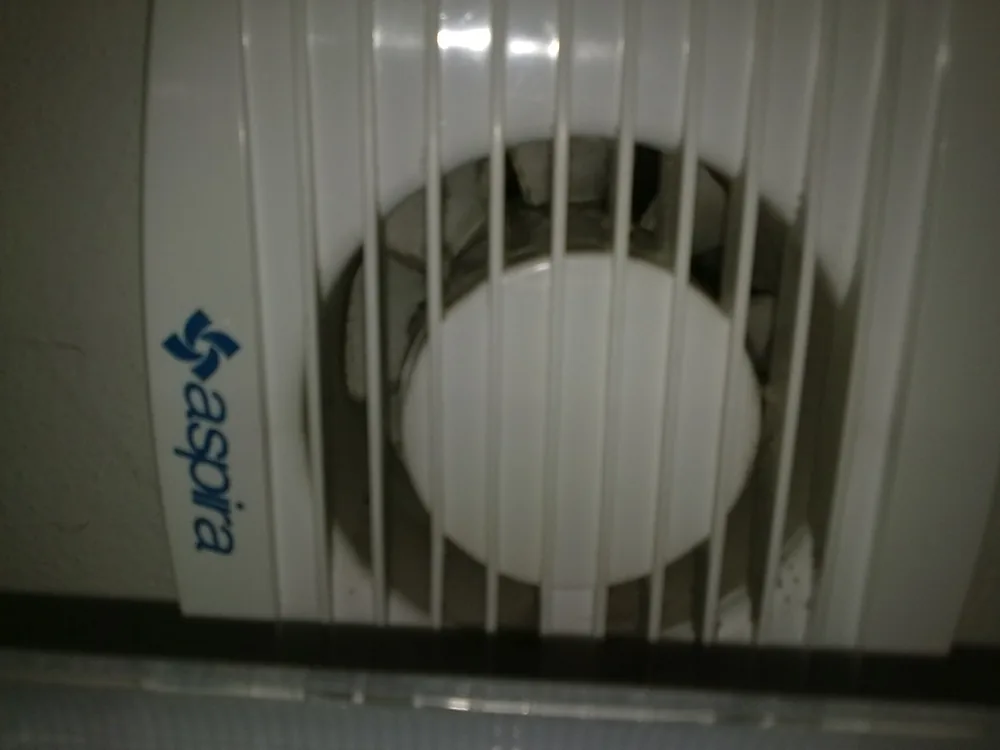
Bathroom: the fan has to really vent outside
50 cfm only means something if the moist air actually leaves the building. A fan that dumps air into the space above a suspended ceiling or into a dead-end duct has merely moved the moisture — somewhere hidden and cold. The logic is the dew point we covered in Humidity, Condensation and Mould: vapour turns to water on a cold surface, and nobody sees what happens behind a suspended ceiling.
Why it matters
It isn’t just stains and peeling paint. The World Health Organization’s guidelines on dampness and mould (2009) say occupants of damp or mouldy buildings are at up to 75% greater risk of respiratory symptoms and asthma.
Source: WHO Guidelines for Indoor Air Quality: Dampness and Mould (2009)
A design checklist for bathrooms and kitchens in a northern villa
- A range hood with a rigid, direct duct to the outside — not recirculating.
- A bathroom fan that genuinely exhausts outdoors, with enough airflow.
- A defined place for drying laundry, vented to the outside, or a spot for a vented dryer.
- Bathroom and kitchen walls and ceilings with no cold spots — no thermal bridges behind the tiles.
- Make-up air: when you pull air out, fresh air has to come in from somewhere.
In short
A family of four puts several litres of water into the household air every day, most of it from drying laundry and cooking. In the rainy north, if that water has no defined way out, it finds its own: on the glass, in the ceiling corner, behind the cabinets. A ducted hood, a real fan and a thought-through drying space are the cheapest insurance this villa can have.
If you’re designing or renovating a villa in Babol, Babolsar or Sarkhorud, get in touch.


No comments yet. Be the first.