


The first serious rain of autumn. A yellow stain in the middle of the bedroom ceiling, then a drop, then a bucket. A roofer comes, patches a piece of membrane right above the stain and leaves. Next rain, the bucket is back.
This story repeats so often that the reason is worth knowing: where it drips is usually not where the water got in. Wikipedia says of flat roofs that water getting through the covering can travel a long way before it shows up, which makes the source hard to find. A leak may even go unnoticed for a long time while water just soaks the layers beneath.
So before the next patch, take a few steps back.
Source: Flat roof — Wikipedia
First: a leak or condensation?
In northern Iran, not all water coming from a ceiling comes from outside. Warm, humid indoor air condenses when it meets a cold ceiling. We covered this in detail in humidity, mould and condensation.
A simple test: if the damp appears only after rain and clears during a dry week, it’s probably a leak. If corners and areas near outside walls are wet on cold, dry days too, it’s probably condensation, and a new membrane won’t help at all.
The three usual suspects
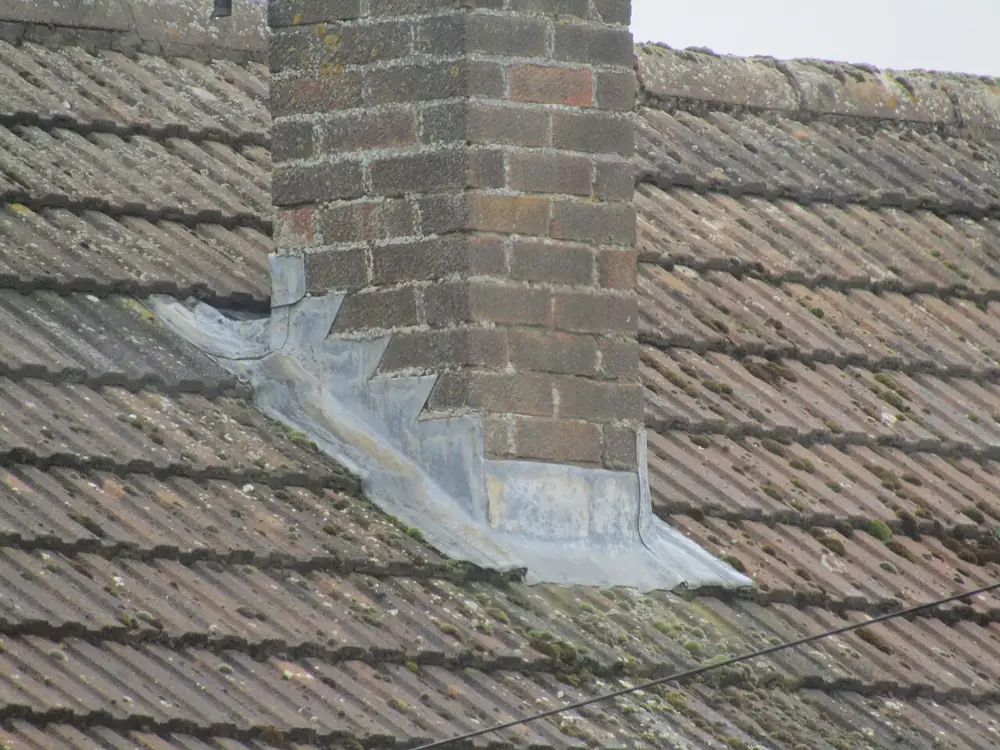
1. The joints: flashing. Wherever the roof covering meets something else is a weak point: beside a chimney, around a vent pipe, at the foot of a parapet wall, around the base of an air-conditioning unit or solar panel. The layer that covers these joints is called flashing, and its job is to cut water penetration at exactly these points. Wikipedia’s flat roof article even says 90 percent of roof leaks and failures occur at the flashings. Read that number with caution, but the message is clear: search around these joints first, not the middle of the roof.
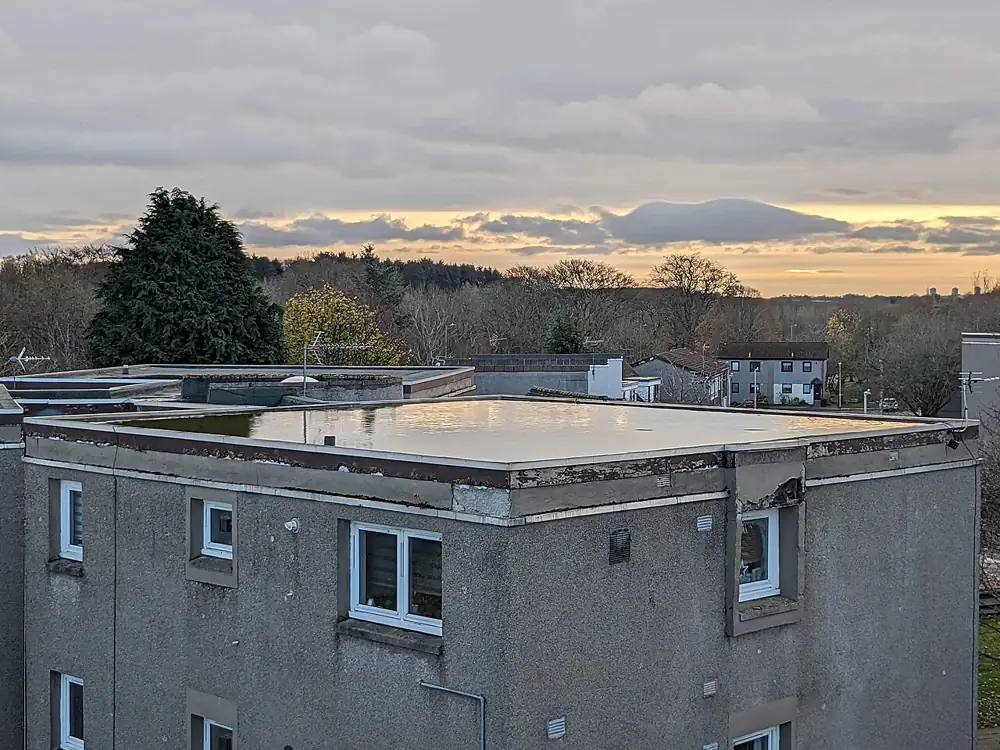
2. Blocked outlets and standing water. In the north, with so many trees and autumn leaves, this one is serious. Wikipedia says a common cause of flat roof failure is outlets blocked by gravel, leaves and debris. The water building up behind them creates a head of water: the deeper it is, the higher the pressure, pushing water into the smallest cracks.
Standing water damages the roof itself, too. According to Wikipedia, on bitumen coverings it leaches out the oils and leaves the membrane brittle, and its weight gradually deflects the structure further; so the hollow gets deeper each time. Its advice is that standing water should usually be removed from the roof within 48 hours.
3. The covering itself, under the sun. A bitumen membrane left unprotected in the sun ages. Wikipedia says ultraviolet light makes it crack and blister until water finds a way in; that’s why old bitumen roofs were covered with a protective layer such as gravel. Fine parallel cracks, or blisters that crunch underfoot, are the signs.
Sources: Flat roof — Wikipedia; Ponding — Wikipedia; Flashing — Wikipedia
How do you find the source?
Start with the cheapest: the outlets. Before anyone cuts a metre of membrane, clean the outlets and downpipes and see where water stays after rain. Sometimes that’s the whole story.
Map the drip. Mark the stain on the plan and see what’s above it, and upslope of it: chimney, vent, AC base, the foot of a parapet. Remember water under the covering runs downslope; so the source is usually upslope of the stain, not right above it.
After which rain? If it only drips in wind-driven rain from one direction, the suspect is probably a vertical joint: the foot of a wall or beside an opening.
Wet it section by section. On a dry day, one person waits inside by the stain while another on the roof wets just one area with a hose for a few minutes at a time: downslope first, then gradually higher. When the drip starts, that’s the source. That way you do one proper repair instead of ten guessed patches.
When does a patch stop working?
If water always collects at the same spot after every rain, the problem isn’t just the covering; the roof’s fall is wrong. Wikipedia also says that if standing water has created a permanent hollow, repairing the leak may no longer be enough. The roof’s falls then need correcting. We explained why roof slope matters so much in the north in pitched or flat roof.
And if the roof is old corrugated cement sheeting, read the asbestos story before any drilling or repair.
Source: Flat roof — Wikipedia
Sign, suspect, what to check first
| Sign | Likely suspect | Check first |
|---|---|---|
| Damp only after rain | Leak | Outlets, then joints |
| Damp in corners on cold, dry days | Condensation | Ventilation and insulation, not the membrane |
| Stain by a chimney, vent or wall | Flashing | That joint’s seams |
| Standing water after rain | Blocked outlet or poor fall | Clear the outlet; if it returns, the fall |
| Fine cracks and blisters on the membrane | Sun-aged covering | The whole covering, not just one spot |
Villa roofs in northern Iran take a lot of rain every year. If you have a villa in Babol, Babolsar, Sarkhorud, Amol or Sari whose roof needs a bucket every autumn, let’s find the source once and for all.



No comments yet. Be the first.