

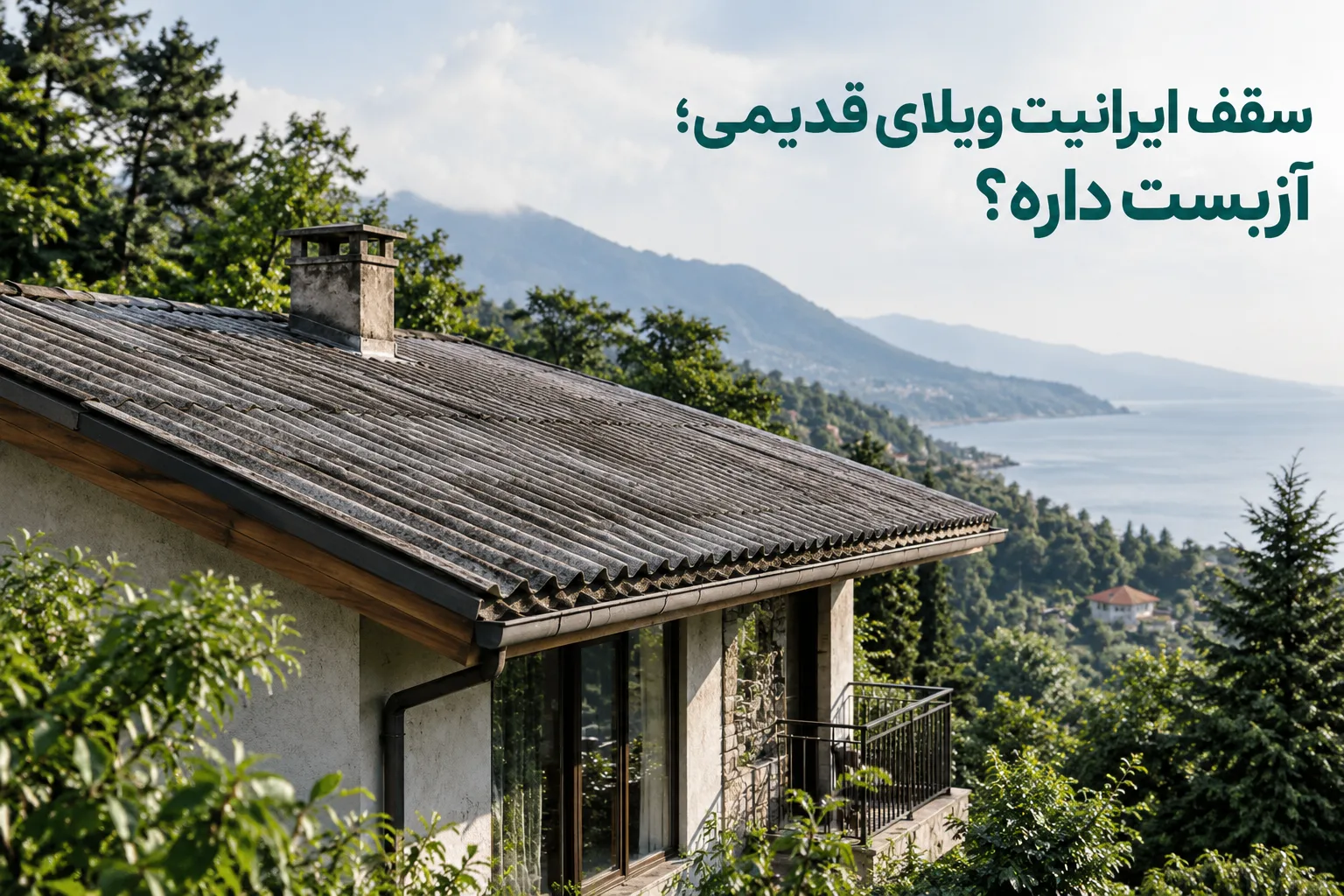
Many old villas in northern Iran have a corner roofed with grey corrugated sheets: a garage, a shed, a patio canopy or a hut at the end of the garden. Locally these are known by a brand-turned-generic name, “Iranit”. And anyone buying or renovating such a villa sooner or later asks: does this sheet contain asbestos?
The short answer is that you can’t tell by looking. But a few things can be said with confidence, and knowing them prevents the biggest mistakes.
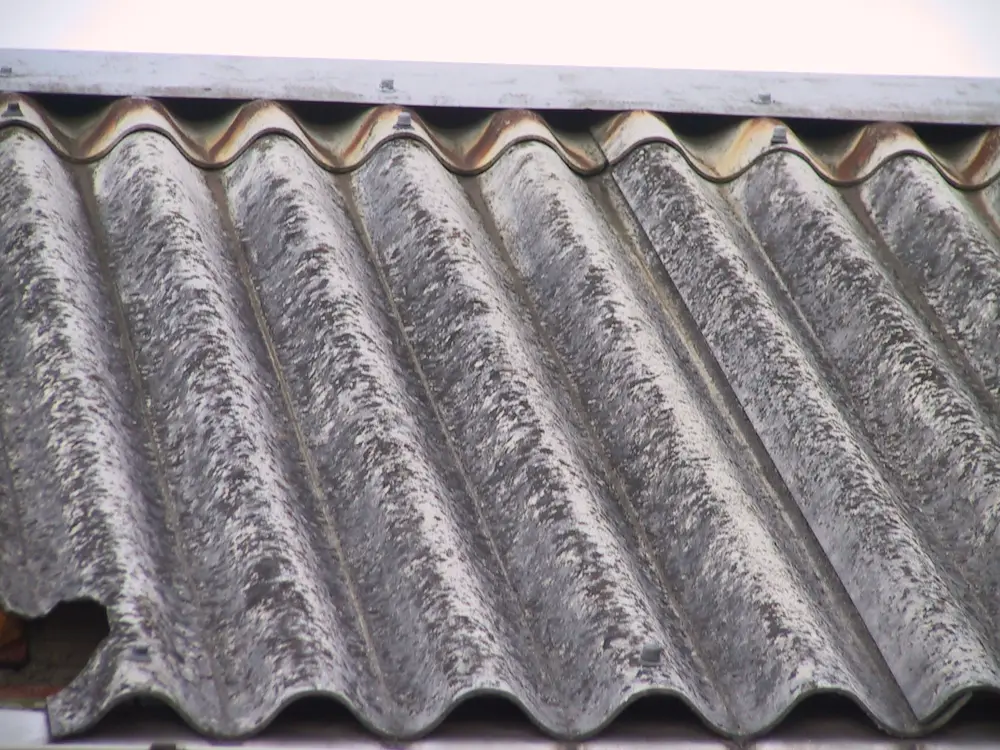 A corrugated asbestos-cement roof. It looks much like asbestos-free cement sheet; only testing gives a definite answer. Photo: Harald Weber — Wikimedia Commons, CC BY-SA 3.0 (resized)
First, a date
In late 2011 (Azar 1390), the deputy head of Iran’s Department of Environment announced that, under a resolution passed that autumn, using any kind of asbestos in the products of factories and workshops, “including car parts and building materials”, was banned permanently, along with registering orders for and importing asbestos.
So the key question about your villa’s roof sheets is: when were they installed? A sheet that went up years before this ban has a real chance of containing asbestos. Wikipedia says of this kind of sheet that its reinforcing fibres were in the past “almost always” asbestos. Still, the only sure way is to have a sample tested by a reputable laboratory.
Sources: Asr Iran, 22 November 2011 — asbestos use permanently banned (in Persian); Asbestos cement — Wikipedia
Why it matters
According to Wikipedia, citing the US Environmental Protection Agency (EPA), all six types of asbestos are known human carcinogens. The diseases that come from breathing its fibres — such as mesothelioma (a cancer of the lining of the lungs), asbestosis and lung cancer — are typically diagnosed about 20 years after exposure. So someone who carelessly breaks an old sheet today may see the effect two decades later. The same source says 66 countries and territories have banned asbestos.
Source: Asbestos — Wikipedia
If it’s intact, leave it alone
This may be the most unexpected part. The EPA says the best thing is usually to leave asbestos-containing material alone if it’s in good condition. Material that is intact and undisturbed doesn’t release fibres. The danger starts when you saw, sand, scrape, drill or break it.
But “intact” is relative for a sheet that has spent decades in sun and rain. Wikipedia says surface weathering of these sheets can release toxic fibres, and that they become brittle and friable with age. So if the edges are frayed, it’s cracked or pieces have fallen off, it no longer counts as “intact”.
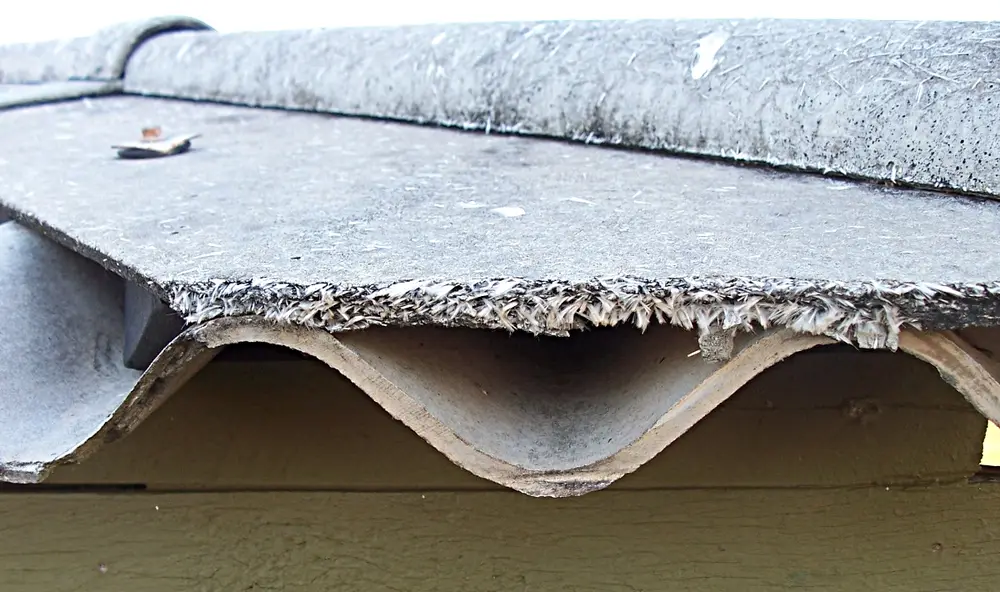 The edge of a weathered asbestos-cement sheet; loose fibres stick out from the edge. A sheet like this no longer counts as “intact”. Photo: Bill Bradley — Wikimedia Commons, CC BY 2.5 (resized)
Sources: EPA — Protect Your Family from Exposures to Asbestos; Asbestos cement — Wikipedia
Three things usually done wrong, with good intentions
1. Pressure washing. The old sheet has gone dirty and black, and the first thought is a pressure washer. Wikipedia says some Australian states, such as Queensland, prohibit pressure washing these sheets because it spreads fibres.
2. Drilling and cutting. To fit a new gutter, an aerial or even a solar panel, people drill into the sheet or cut a piece off with a grinder. The EPA says plainly: don’t saw, sand, scrape or drill holes in asbestos-containing materials.
3. Pulling off, breaking up and binning. People remove the sheets themselves, break them up to fit in the car, and sweep up the debris. The EPA says not to break asbestos materials into small pieces, and not to dust, sweep or vacuum the debris.
Sources: EPA — Protect Your Family from Exposures to Asbestos; Asbestos cement — Wikipedia
If you want to replace it
Renovating an old villa usually means these sheets have to go too. The EPA is clear here as well: if the material is more than slightly damaged, or renovation will disturb it, repair or removal should be done by a trained and accredited professional, and before renovating it’s best to have an inspector sample and test it.
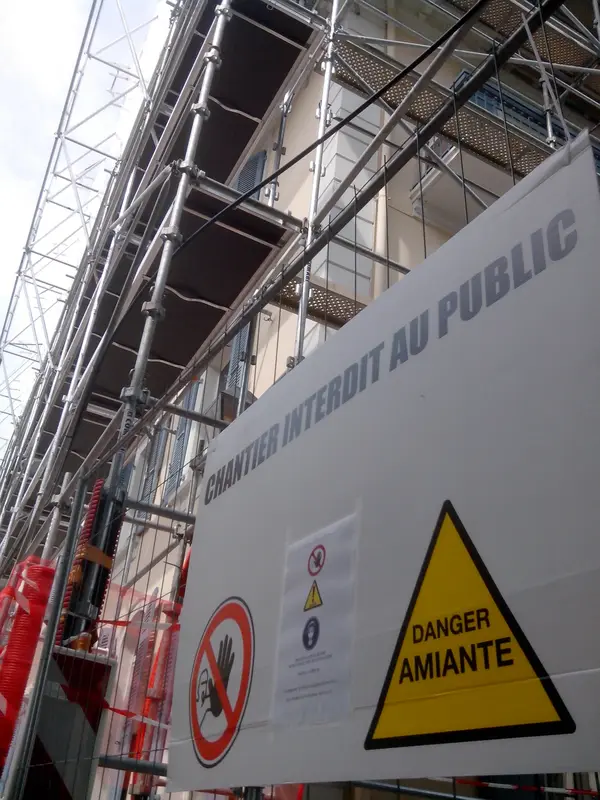 An asbestos removal site in France, with a “Danger: asbestos — no public access” sign. Removing this material is a job for specialists, not a family weekend. Photo: Manuguf — Wikimedia Commons, CC BY-SA 3.0 (resized)
Once the sheets are gone, choose the new covering with the north in mind: every covering has its own minimum pitch, and in the rainy north that pitch is decisive, as we explained in pitched or flat roof. And if you’re buying a built villa, put these sheets on your inspection list alongside everything in buying a built villa in the north.
Source: EPA — Protect Your Family from Exposures to Asbestos
Your situation, the right move
| Sheet condition | Right move | Why |
|---|---|---|
| Intact, uncracked, nobody touches it | Leave it and check on it now and then | Intact, undisturbed material doesn’t release fibres |
| Old and dirty | No pressure washing | Water pressure spreads fibres |
| Frayed edges, cracks, missing pieces | Testing and a specialist’s opinion | No longer counts as “intact” |
| Due to be renovated, drilled or removed | Test first, then removal by a specialist | Cutting and breaking release fibres |
Renovating an old villa is full of decisions you can’t see from outside. If you have a villa in Babol, Babolsar, Sarkhorud, Amol or Sari that you want to renovate, let’s start with these first checks together.





No comments yet. Be the first.