

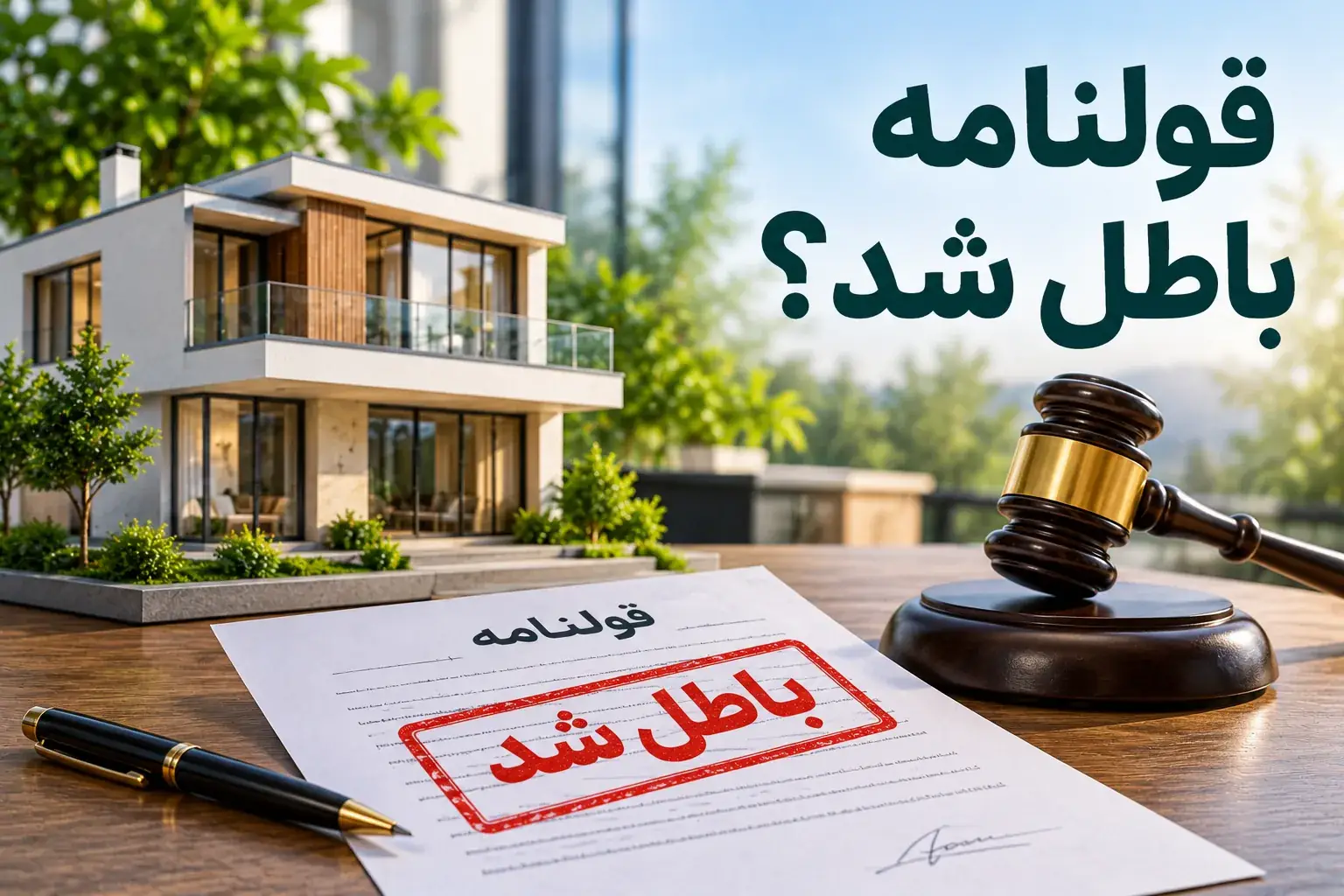
“We’ll write up a private contract now and do the deed later.” For years this line has been normal in land and villa deals in northern Iran. The buyer pays, takes the house, may even live in it for years, and the deed stays in the seller’s name.
That habit is now becoming expensive. Iran’s Act on Compulsory Official Registration of Real Estate Transactions has arrived, and the system it called for went officially live in stages from 22 May 2026 (1 Khordad 1405). For many private contracts, the clock is running.
So are private contracts void now? Not overnight, and not for everyone. For some deeds they already go unheard in court, and for others there’s a deadline; but the direction is clear, and an unregistered contract is losing its backing.
What does the law actually say?
Article 1 says that from a certain date, buying and selling property, pre-selling buildings, mortgages and even promises to make these deals must be registered in the electronic deeds system. If they aren’t, courts and arbitrators won’t hear your claim: no suit to compel a deed, no validation of the sale, no eviction. Only one route stays open: asking for your money back.
And its key sentence is this: before these bodies, the owner is only the person in whose name the property is entered in the land register, or who inherited it from the official owner. So after that date, an unregistered contract won’t get you the property itself.
Source: Text of the Act, Article 1 — Ekhtebar (in Persian)
The colour of your deed changes things
That “date” isn’t the same for everyone. The Registration Organisation’s spokesperson has explained it like this:
| Property deed | Dealing on a private contract |
|---|---|
| Green single-sheet (issued after 23 June 2024) | Already now: a handwritten or typed contract won’t be heard in court if a dispute arises |
| Yellow single-sheet (issued before 23 June 2024) | Can be traded the old way until one year after the system’s official launch, though official deals are strongly advised |
| Booklet deed | Must be exchanged; after conversion it gets a green deed and falls under this law |
Don’t confuse the one year with the two years. The second deadline is for those who already hold a private contract:
| Issue date of the property’s cadastral deed | Deadline to register a claim |
|---|---|
| 21 March 2017 to 21 May 2026 | Two years from 22 May 2026 |
| 22 May 2026 onward | Two years from the day the deed is issued |
| All other properties | To be announced in the Official Gazette, though claims can already be registered now |
Sources: Mehr News, May 2026 — spokesperson (in Persian); Nour News, 23 May 2026 — launch notice (in Persian); Shafaqna, October 2026 (in Persian)
If you hold a private contract and still have no deed
Suppose you bought a villa on a private contract a few years ago and the seller still hasn’t transferred the deed. You face two separate steps, and many people only see the first:
Step one: register the claim. You log in through the Kateb portal (kateb.ir) with a Sana account, and the SIM card must be in your own name. The system is location-based, so you first need a UTM map of the property; if you don’t have a map tracking code, the system refers a surveyor. Then you upload your documents: the contract, settlement deed, court ruling, farming rights, witness statements, inheritance certificate and so on.

Step two: legal action. Registering the claim isn’t the end. From that day you have two years to get an official deed or bring the necessary action. According to the spokesperson, the claim certificate is now a condition for going to court; so if the seller won’t transfer, you register the claim first and then sue.
What if you’re late? After the deadline, the system takes no new claims. Claims against public and state land, and against someone who obtained an official deed in good faith, will no longer be heard. In some cases all that remains is demanding the property’s current value from the party at fault, which is harder and doesn’t give you the villa back.
A warning against shortcuts too: knowingly registering a private document without entitlement carries a fine equal to 20 percent of the property’s current value, under Note 5 of Article 10.
Sources: Mehr News, May 2026 — claim details (in Persian); Shafaqna, October 2026 (in Persian); Article 10 of the Act — Ekhtebar (in Persian)
Should you buy on a private contract?
If the deed is a green single-sheet, a handwritten contract has no backing in court if a dispute arises, so the answer is clearly no. For the rest, only go ahead when the route to an official deed is clear. First look at the deed’s colour and date, not just the view. Then take one of the official routes: directly to a notary, or through an estate agent and the system.
There’s a new trap as well: an agent may put a draft in the system and say “it’s done”. According to the Registration Organisation, on this route the parties must go to a notary within 5 days, or the draft is automatically deleted and has no legal effect. The spokesperson says plainly: at this stage, don’t hand over money or documents.
If price and terms aren’t ready for final transfer, the law has a route for that too: under Article 2, a promise to sell or sale agreement can be drawn up and registered at a notary, with the exact price, instalments and cancellation terms. So a preliminary contract can stay, but official.
Sources: Mehr News, May 2026 (in Persian); Article 2 of the Act — Ekhtebar (in Persian)
Why is this more sensitive in the north?
Because many private contracts in the north aren’t about a flat with a clean deed; they’re about an orchard, an old rice field, or land near the coast and forest.
Public land. The law names it: national, undeveloped, crown, reclaimed and coastal land. If what you bought overlaps with these, having your claim go unheard after the deadline is a real risk. Better to settle it sooner.
Orchards and farmland outside city limits. Note 3 of Article 10 sets a separate route for this land and for village plan areas: the Housing Foundation or the land affairs office identifies the occupant and prepares a map, and after checking with the natural resources office, it’s advertised. Interested parties have six months to object. If you have such land, ask your county’s land affairs office or Housing Foundation.
A deed isn’t permission to build. An official deed puts the property in your name, but doesn’t change the land use. Before spending on design, see the land-buying checklist and the building permit route. If the land is by a river, there’s also the river setback, and for a finished building, what to check before buying.
Source: Article 10 and Note 3 of the Act — Ekhtebar (in Persian)
Two last caveats
This law hasn’t fully bedded in. In spring 2026 the spokesperson said 10 of the 14 implementing regulations had been approved and the launch was in stages. So these dates may be filled out by new notices; before any decision, ask a notary or the registry office for the latest position.
And this article isn’t legal advice. If your case involves a deceased seller, several contracts in a chain or a boundary dispute, speak to a property lawyer.
If your land’s deed is settled in Babol, Babolsar, Sarkhorud, Amol or Sari and it’s time for design, leave the next part to us.

No comments yet. Be the first.