


Imagine you own a forty-year-old villa in Babolsar, or you’re about to buy one. The land is great, the building is tired. One person says “tear it down and start over.” Another says “it’d be a shame, just freshen it up.” And someone always has a ready formula: “If renovating costs more than half of building new, tear it down.”
It’s a neat formula. But however much we searched, we found no reputable source saying this about villas in Iran.
Where does this 50% come from?
The best-known “50% rule” in building belongs to FEMA, the US emergency management agency, and it has nothing to do with your budget. It says that a building in a high-risk flood zone must be brought into line with current flood standards if the cost of repairing or improving it reaches half the market value of the structure itself (land not included).
So even that rule doesn’t say “demolish”. It says “bring it up to date”. Set the number aside. Instead there are four questions, to be asked in this order, because the answer to any one of them can make the rest irrelevant.
Source: FEMA — Substantial Damage Quick Guide
Question 1: Is this structure worth keeping?
Start with the year it was built. Iran’s first temporary earthquake code came in 1964 (1343), followed by another code in September 1967 (Shahrivar 1346). The first edition of Standard 2800 was drawn up in 1987 (1366), and compliance was taken more seriously after the Rudbar-Manjil earthquake of 1990 (1369).
The year isn’t a final verdict: an old building can be well built and a new one badly built. But a villa that predates these milestones needs a more serious inspection. We covered seismic design at length in the earthquake-resistant villa.
The second thing is moisture. According to Wikipedia, concrete is damaged mostly by the corrosion of reinforcing bars, carbonation and chloride attack in wet conditions. Interestingly, without water, rebar corrosion is very limited. But the north is hardly short of water, and chlorides are also present in seawater and groundwater. The nasty thing about chloride corrosion is that it’s localised and creeps along quietly; the bar’s section can shrink to the point where it no longer does its job.
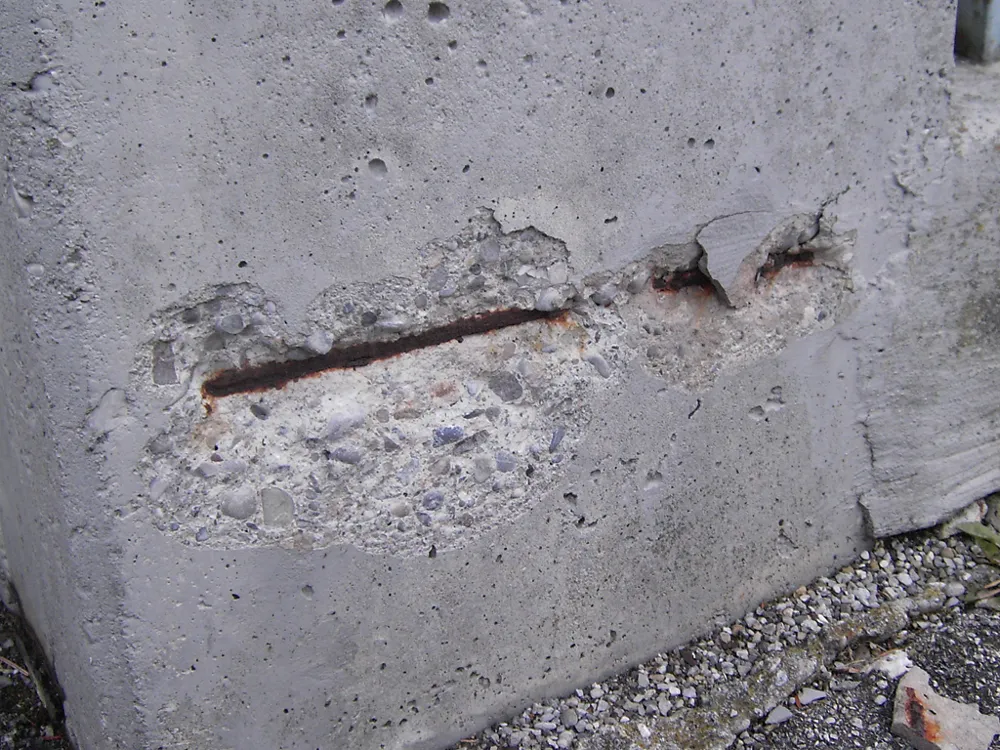
We explained which cracks are dangerous in wall cracks, but the final judgement on a structure belongs to a structural engineer. Assessing existing buildings is specialised enough to have its own standards, such as ASCE 41 in the US. So get this inspection done before any cost estimate.
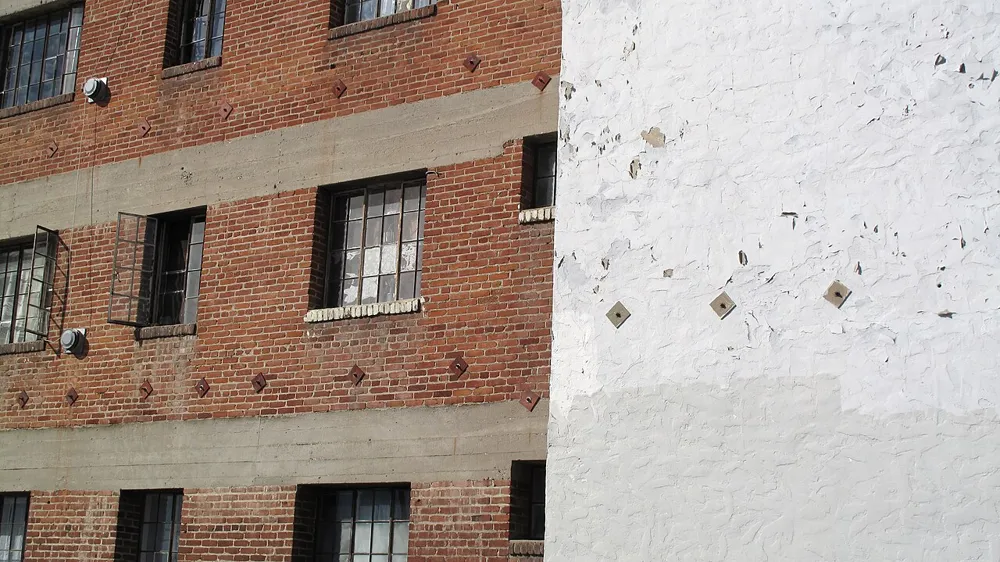
If the engineer says the structure has a serious problem, your choice is no longer between “a coat of paint” and “demolition”. It’s between retrofitting and demolition. Ask the same engineer to estimate both.
Sources: EcoIran, 3 January 2025 (in Persian); Concrete degradation — Wikipedia; Seismic Evaluation and Retrofit of Existing Buildings, ASCE/SEI 41
Question 2: What’s behind the plaster and tile?
A renovation estimate usually starts with what you can see: floors, kitchen, paint. But what can wreck the numbers sits behind those things.
Is the base of the wall damp? First you need to find out whether it’s rising damp, condensation or a leak, or fresh plaster and paint will soon be ruined too. Is there a grey corrugated roof at the end of the garden? Read the Iranit and asbestos story, because removing it isn’t a job for you. Where does the sewage go? An old absorption well may be a separate project in itself.
So base the estimate on a few opened-up spots: a patch of bathroom floor and wall, the base of the damp walls, and under the roof covering. A price given without opening anything is more a guess than an estimate.
Question 3: If you demolish it, are you allowed to build the same thing?
This is the question that usually gets asked last, when it should be answered before the first swing of the pick.
Article 100 of Iran’s Municipalities Act says owners within a city’s limits and its surrounding zone must obtain a municipal permit before any development work or construction. So a new building means a new permit, measured against today’s rules for the area: density, plot coverage, number of storeys and setbacks. These may have changed a great deal since the villa was built. We described the route in the villa building permit.
In the north, there are two more traps:
Orchard or farmland. According to an advisory opinion from the judiciary’s Legal Department, an owner of farmland or an orchard inside a city’s surrounding zone who wants to put up a building must first get a land-use change permit from the relevant commission, then apply for the municipal permit; unless the land has been converted to a garden city or tourism zone under an approved plan. The fact that an old building already stands on the land doesn’t answer this question by itself.
Closeness to a river. If the property is by a river, check the setback before anything else; we explained why in a villa by the river.
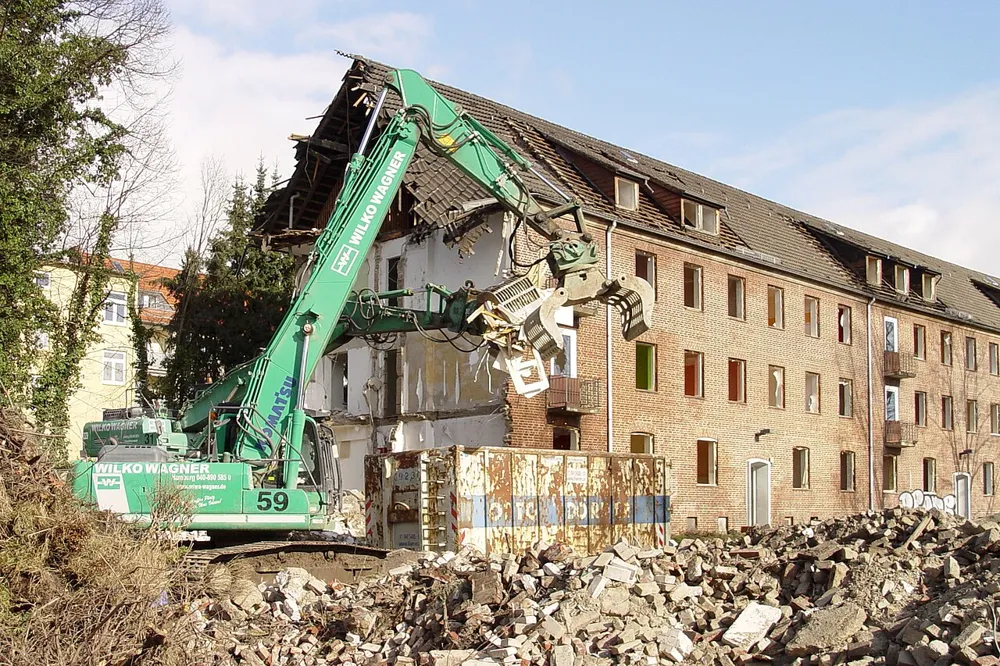
So before demolishing, put one specific question to the municipality or village council and the agriculture department: “If I remove this building, what can I build on this land with this deed?” And get the answer in writing.
Renovation isn’t automatically exempt either. We found no clear text that precisely defines where “repairs that need no permit” end, especially for a building on farmland. So ask about that before you start, too. This section is general information, not legal advice; for your own property, speak to a property lawyer as well.
Sources: Article 100, Municipalities Act — Edalatsara (in Persian); Advisory opinion 7/1402/596, 19 December 2023 (in Persian)
Question 4: Is a new building really more efficient and greener?
A common reason for demolishing is “I’ll build new, insulate it, my bills will drop and I’ll help the environment.” A well-known US study called The Greenest Building measured exactly this, and single-family homes were among its samples. The result is surprising: a new building that is 30 percent more efficient than an average existing one takes 10 to 80 years to make up for the climate impact of its construction through lower energy use. And when two buildings have the same energy performance, reusing a building has between 4 and 46 percent less impact.
Two important caveats: the study only looked at US cities and doesn’t talk about money. And it warns that a poor choice of materials in a renovation can wipe out the whole benefit. So these numbers aren’t a prescription for your villa; they only show that “new is always greener” is a false assumption.
On the other hand, thermal insulation and windows can be replaced in a renovation too. So if energy use is your only reason for demolishing, start with those.
Source: The Greenest Building — Preservation Green Lab
So which way does it lean?
We won’t give you a number here either; this table only shows which way each answer pushes the decision.
| What you found out | Which way it leans | Why |
|---|---|---|
| The engineer says the structure is sound; the faults are in services and finishes | Renovate | The core of the building is fine |
| The structure has a seismic weakness or serious corrosion | Compare retrofit and demolition with an engineer’s estimate | Either may make sense |
| Today’s rules wouldn’t allow this building to be rebuilt | Keep it until you have a written answer | Demolition can’t be undone |
| The layout doesn’t work for you and the structure blocks changing it | Rebuilding gets more serious | Renovation is limited by the same structure |
| Energy use is the only reason to demolish | Renovate and upgrade | Insulation and windows can be replaced |
If you have an old villa in Babol, Babolsar, Sarkhorud, Amol, Sari, Qaemshahr or Fereydunkenar and you’re stuck between these two paths, let’s look at it together before anyone picks up a pick.



No comments yet. Be the first.